Sonarworks' new binaural capture system, Virtual Monitoring PRO, lets you bottle your studio's acoustic signature and carry it anywhere in your headphones.
What if you could bottle the exact sound of a room—the reflections, the sweet spot, the quirks—and carry it wherever you go? Imagine teleporting straight back into that space on demand, stepping into its soundstage as if you never left.
You’ve probably heard the term “soundstage” thrown around. It’s literally that: a three-dimensional stage of sound suspended around you. It’s defined by the distance, orientation, and clarity of sonic elements relative to a listener. Theatres, live venues, and even your local cafe all have their own unique soundstage.
Catch up on all the latest features and reviews here.
In music production, every step shapes the soundstage: recording choices, mixing methods, playback mediums, and, of course, the speakers or headphones delivering the experience. Traditionally, creating a well-crafted soundstage requires meticulous mixing on quality monitors in a treated room. Not everyone has that luxury.
The closest workaround has long been Sonarworks’ calibration ecosystem, SoundID Reference. It informs, tweaks, and personalises your monitoring setup with surgical detail: tuning hardware, flattening frequency response, applying custom curves, simulating playback environments, and giving you A/B lifelines when your ears start hallucinating. But these powerful tools mostly served the audiophile crowd. Many self-produced artists operate on sheer vibe, chasing emotional resonance over surgical accuracy. “Frequency response” doesn’t exactly keep them up at night.
Apparently, Sonarworks listened.
Virtual Monitoring Pro
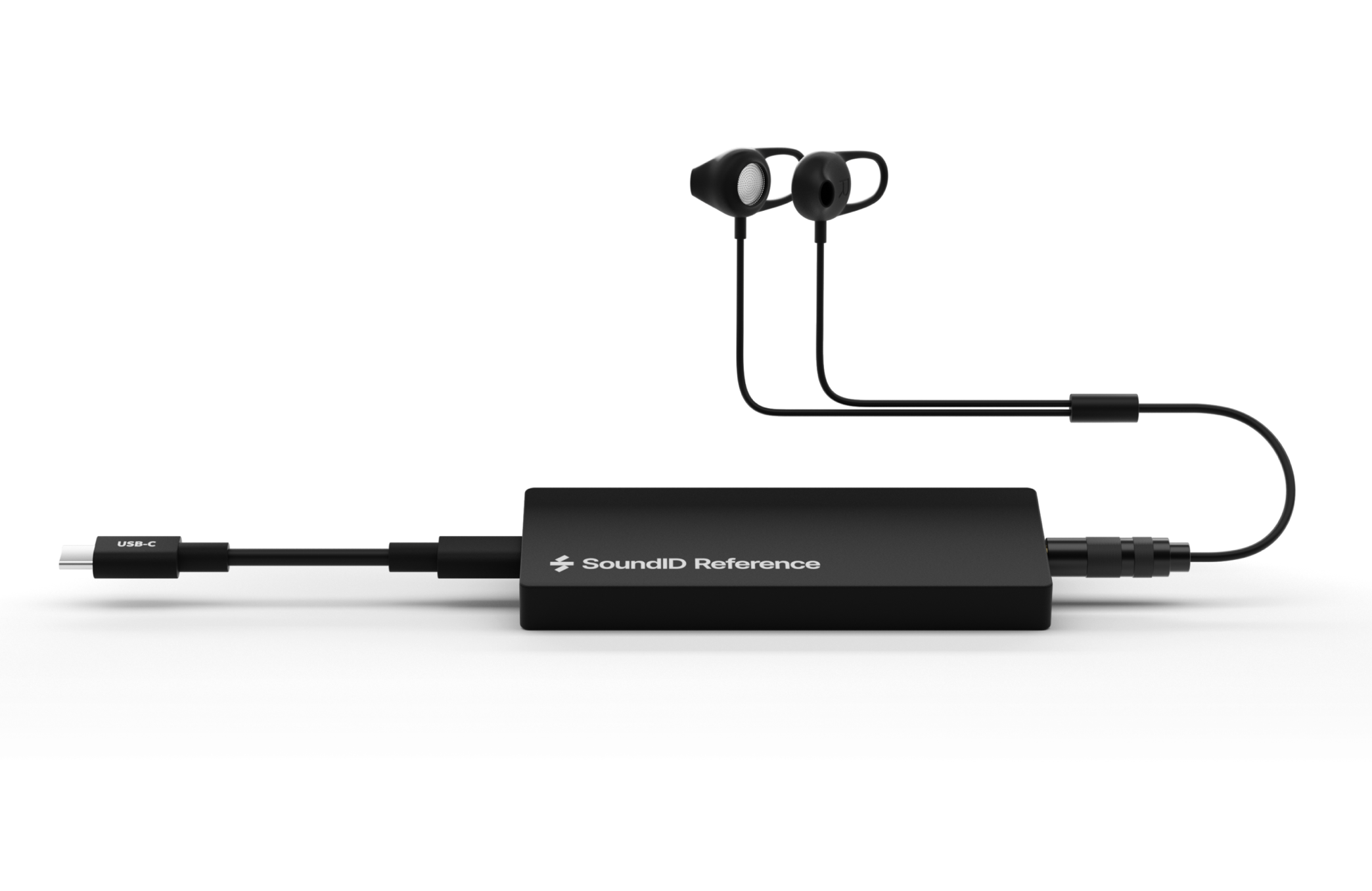
SoundID Virtual Monitor Pro, paired with the SoundID Binaural Microphone, is a software/hardware leap that genuinely narrows the divide between “bedroom artist” and “professional engineer.”
Artists can now capture the acoustic character of their studio from their actual listening position and teleport back to that space from anywhere in the world. As someone who mixes from home, works ad-hoc, and obsesses over perspective, this is the first time that divide has felt meaningfully thinner. The implications are huge: any first-person sonic perspective can become a portable virtual soundstage through the magic of binaural capture.
The Binaural Method
And what is binaural? You are.
Binaural microphones mimic and even hijack your ears’ spatial perspective, capturing sound the way human physiology receives it. ASMR-ists and field recordists swear by it for its uncanny immersion, like astral projecting into someone else’s skull. The SoundID binaural mics themselves deserve applause. They’re lightweight, USB-powered, cover 20Hz–20kHz, and use capsules much larger than typical in-ear binaurals. They flaunt a rare 5-pin TRRRS connector and twisted cable design to reduce inconsistencies and suppress interference.
Honestly, the mic alone is one of the most affordable, high-quality binaural options available, and class-compliant USB means near-universal compatibility. Even Sonarworks seems to hint about exploring alternative use. There are slight downsides: only 16-bit/44kHz, the capsules can slip within their silicone housings, and they’re not luxurious for long sessions. But for a measurement tool, these are gentle caveats. Calibration is deceptively simple: install the software, slip the mics into your ears, follow the prompts, and let the system build a virtual model of your room, speakers, and your own HRTF (your personal ear–head acoustics). It takes under ten minutes.
To test accuracy, I made three profiles across wildly different environments, all tuned to my HD600s: my home studio monitors at different distances, my car stereo from each seat, and a rattly, fizzly laptop placed around my loungeroom. Yeesh. They’re absolutely onto something. Switching between the real environment and the headphone simulation, the imaging, mid-bass behaviour, sub energy, and tonality translated with eerie familiarity.
The system even lets you tweak sub and tweeter behaviour to really rein in the realism, showcasing Sonarworks’ attention to detail. Strangely, or suspiciously, the laptop’s distorted rattle vanished in its profile, leaving behind a ghostly imprint of what those speakers wished they still were. Spooky. In practice, loading the plugin onto my master chain during a mix lets me jump between environments while still trusting decisions about panning, transients, midrange EQ, and vocal placement. This isn’t some gimmicky “big room reverb” novelty; it’s subtle, grounded, and believable.
Once you realise what it can do, the floodgates open.
-
Work remotely with your studio profile loaded
-
Cross-check familiar mix spaces
-
Reference collaborators’ rooms
-
Build “client POV” listening profiles
-
Capture performance venues
-
Reanimate dying speakers
-
Experiment with creative oddities like “Gameboy perspective” or “lying on the floor” soundstages
-
Use it to teach room acoustics
-
Build VR-ready profiles
The possibilities are dizzying.
There are a few variables worth considering; some pedantic, some semantic. My recommendation is: create three profiles from the same position, then three from alternate positions. This gives you a reliable cluster instead of a single point of failure. Otherwise, embrace the chaos as another experimental frontier!
SoundID Virtual Monitor Pro isn’t a replacement for a high-quality monitoring space, but it is a re-orientation of perspective — the closest thing I’ve experienced to carrying my studio in my backpack. It bridges worlds that once had nothing in common: experimental sonic capture and real, utilitarian engineering workflow. For anyone working hybrid, remote, mobile, or in unpredictable spaces, this is one of the most important monitoring tools of the decade.
DJs will benefit from the combination of isolation and the ability to quickly move one cup aside while maintaining the other. Sound engineers working in the field will appreciate the portable form factor and reliable isolation. Producers and mixers will value accurate monitoring without the bulk of larger over-ear designs.
For more information, head to Sonarworks.