The much-anticipated Akai MPC Sample is here.
The legendary MPC line of products shaped some of hip-hop, R&B and electronic music’s most classic recordings. The original MPC 60 allowed musicians to produce lavish instrumentals at a time when such capability was virtually unheard of.
Nowadays, there are MPCs for every function. Semi-portable MPCs like the MPC Live 3 are as powerful as a DAW. Akai designed the MPC Studio line for use in tandem with their Windows and macOS software. The original successors to the MPC 60 are still widely available on the secondhand market. After almost 40 years of design evolution, what does the MPC Sample bring to the table?
Catch up on all the latest features and reviews here.
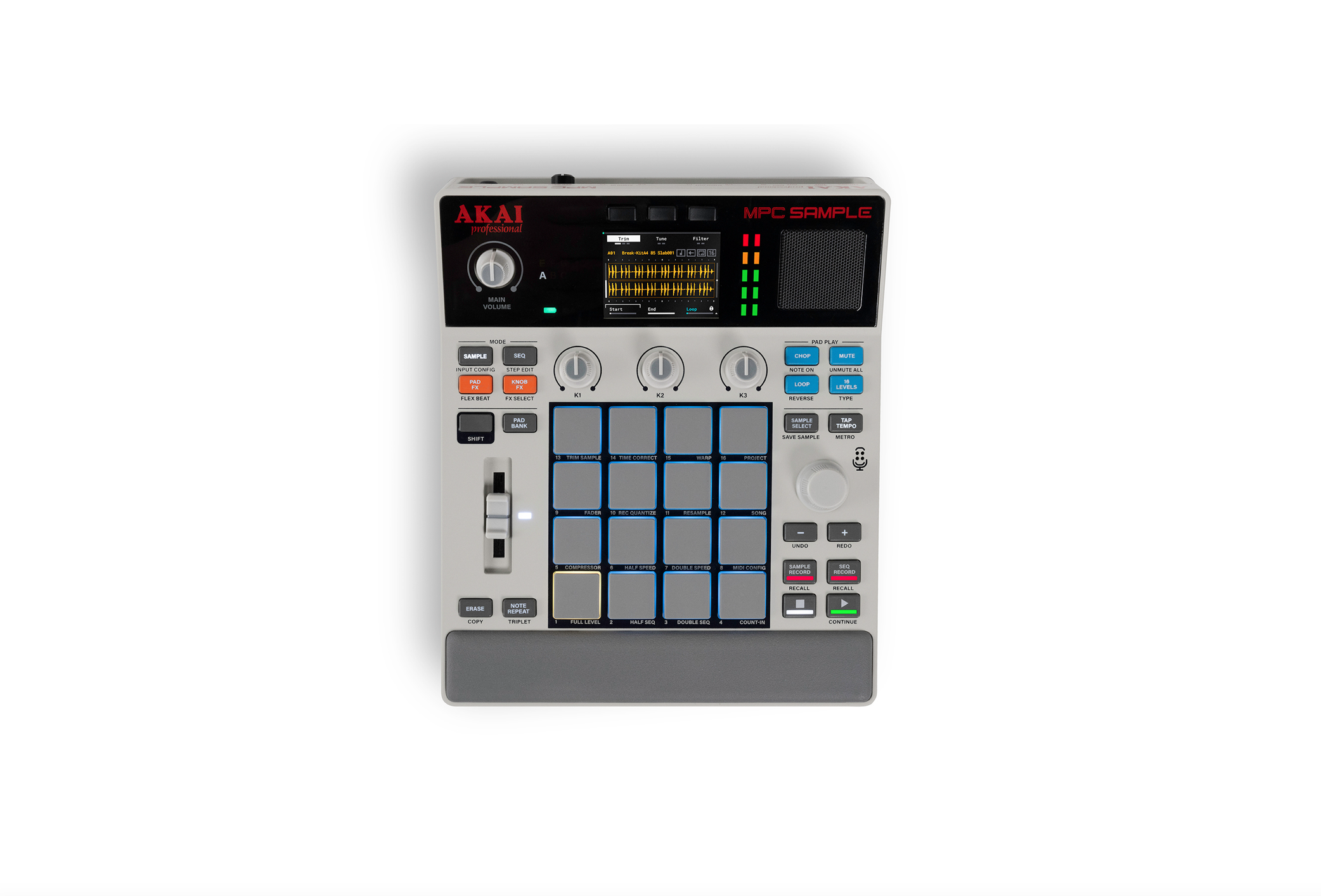
The MPC Sample offers a return to basics. Keywords from Akai’s website are “intuitive”, “simple”, and “idea generation”. It’s robust, too, boasting 60 on-board effect types and a master compressor with “retro colour”. This iteration is designed to keep the MPC workflow in your backpack, with a 5-hour battery life. It’s designed for a new generation of artists who want to focus on what really matters in rhythmic music production.
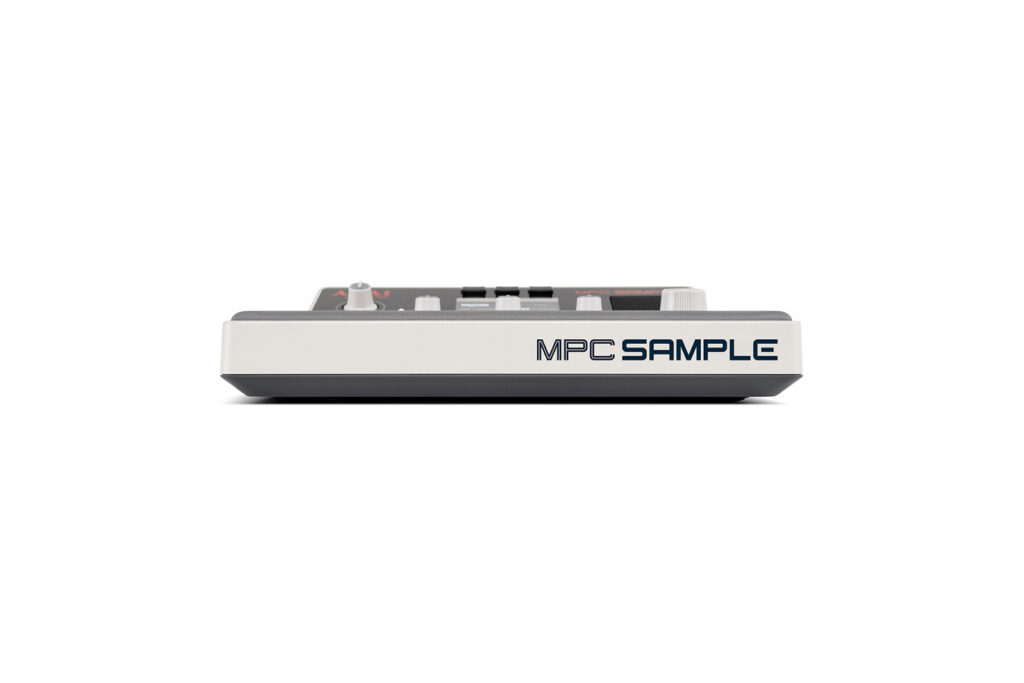
DAWs are endlessly granular. The first impression a user gets is that of a passenger sitting in an airplane cockpit. The Sample makes the MPC workflow intuitive for even absolute beginners. It’s a fully-featured production station without the bells and whistles. Akai is aiming for versatility. The Sample targets a strapped-for-cash market that hungers for durable and affordable gear.
The Sample begs you to assign any sounds to the MPC’s pressure-sensitive pads. A built-in dynamic microphone is the key innovation here. Next to the sequence record button is an identical sample record button, encouraging users to collect sounds as often as they use them.
Any sound from your environment is waiting to be chopped, reversed, pitched, panned, loaded with effects and re-sampled beyond recognition. Combine these sounds with the stock drum kits and loops to make something entirely new, joining in the lineage of the greatest tastemakers in recent music history.
Like other MPCs, the Sample comes with a factory library of high-quality one-shots and loops. The 2GB of samples span genres including hip-hop, funk, house, jazz and more. The sounds are of high quality and will be useful well into the future for building your sample library. 8GB of internal storage and a micro SD slot allow endless expansion. There is plenty to get started with before connecting your MPC with more advanced production setups.
The MIDI and USB-C connectivity of the Sample allows a variety of use cases. On its own, you can produce, compose, record, sequence and arrange an entire song. The I/O includes 2 1⁄4” TRS ports for audio in and 2 for audio out, with MIDI and sync out. The USB-C port is used to charge the battery, connect gear and transfer data. Tucked at the back of the machine, the I/O allows the Sample to work in perfect harmony with extensive collections of audio gear. You can use the built-in speaker or plug in your headphones.
At first glance, I was wary of the pads, which are smaller than the standard MPC size. Usually, bite-sized alternatives cramp the interface and use cheaper materials. Portability being a selling point, how does the Sample measure up in build quality?
It looks like there is no worry here. The usual suspects: ports, knobs and drum pads, are sturdy with an expensive feel. Haptic feedback is satisfying and responsive. It’s easy to perform a hi-hat roll with varied velocity without your fingers straying off the pads. The smaller pads may even work better for some users – there is less distance your fingers need to travel to trigger other samples. Despite this, I never hit the wrong pad by accident. Even with smaller pads, it feels identical to drumming on my MPC Studio.
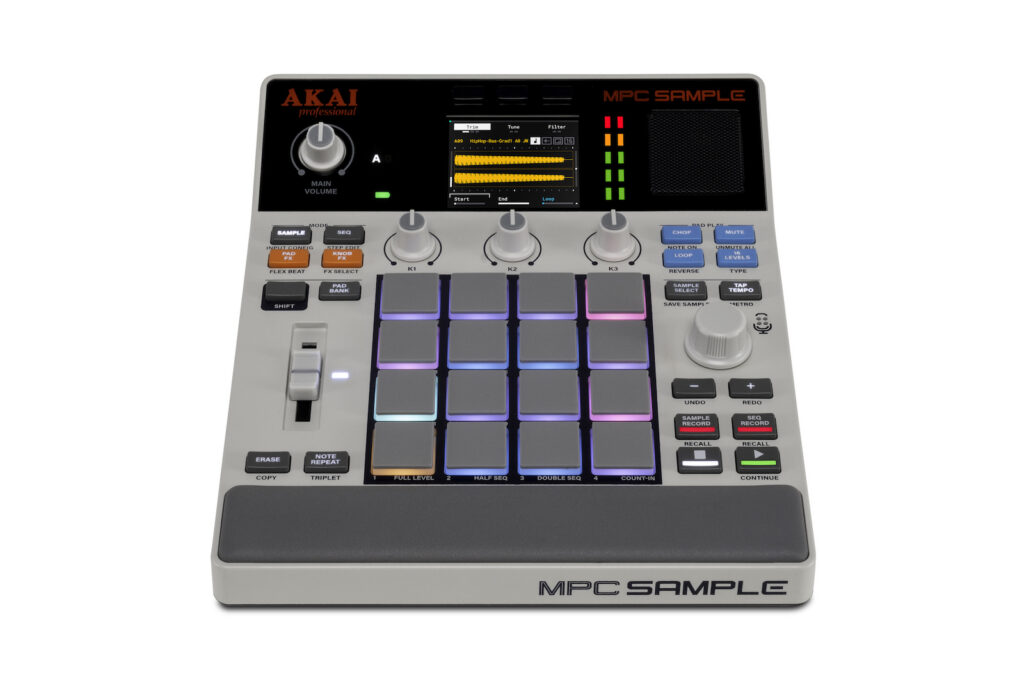
It also doesn’t budge; you can punch in rhythms without the device moving or tilting on your lap. This allows you to trust your muscle memory over time, so you can learn the MPC Sample like any other instrument. This has always been a strength of the MPC, but now this strength can better fit into your schedule.
The MPC Sample is what Akai says it is. Whether it fits into your music production workflow is another question. It’s a product defined by its quality and convenience, but also by its limitations. If you want the MPC workflow on the go, you will find the build quality and portability to exceed your expectations.
It can’t replace a DAW, but it can focus your creativity in ways DAWs can’t. If you’re an MPC enthusiast, you can already see where this fits into your process. For those just getting started with MPCs or music production, Akai positions it as the entry point in both price and functionality. Either way, the Sample has a way of bringing fun and focus back to making music.
Check out the Akai MPC Sample here. For local enquiries, head here.