The new update adds 45 synthesis waveform models based on Mutable Instruments' Braids Eurorack module, dramatically expanding the Australian-made polysynth's sonic capabilities
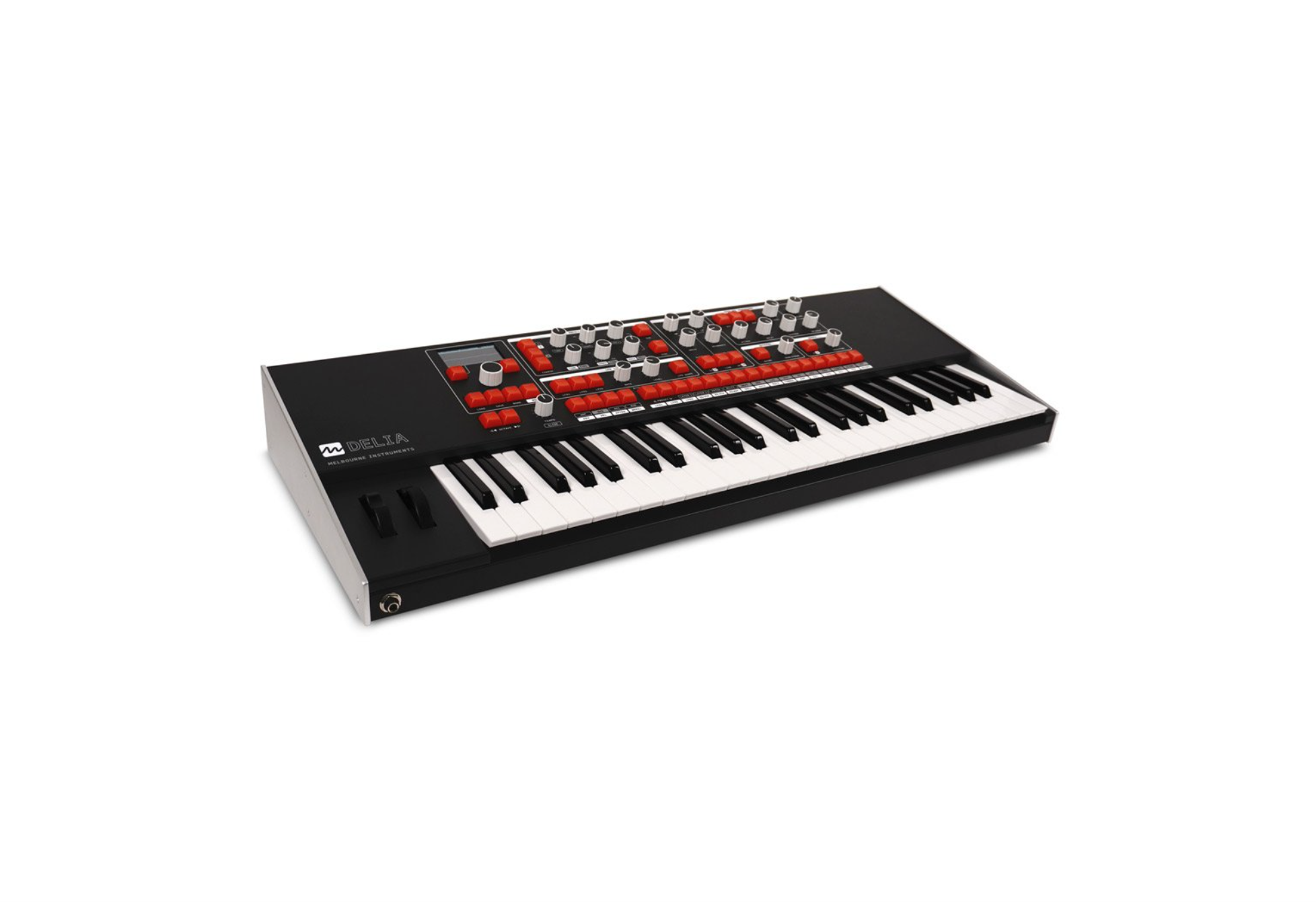
Melbourne Instruments has released a significant firmware update for Delia, their motorised hybrid polysynth, introducing Macro Oscillator Mode and 45 new synthesis waveform models. Drawing on open-source code from Émilie Gillet’s Mutable Instruments Braids—one of the most celebrated Eurorack modules in modular synthesis history—the update transforms Delia into a hybrid powerhouse capable of everything from classic analog textures to cutting-edge digital experimentation.
Catch up on all the latest news here.
The new Macro Oscillator Mode doesn’t just add a few extra waveforms, but fundamentally expands Delia’s tonal range. Each waveform model is shaped by two expressive parameters, Timbre and Color, adapted from the original Braids module. Unlike traditional single-dimension controls, these parameters affect multiple tonal dimensions simultaneously, producing evolving, complex and musically responsive sounds that react dynamically to modulation sources.
Delia’s existing architecture makes this update particularly significant. The synth’s deep modulation matrix, multi-mode analog filters, morphing capability, and motorised control interface provide hands-on access to these new synthesis engines in ways that wouldn’t be possible on a typical hardware synth. Six-voice polyphony with 12-note capability and bi-timbral operation means users can layer or split these new oscillator models for massive sonic depth.
“Delia was already something special, but now we have 6-voices of Braids Macros, along with Delia’s extensive modulation matrix, the sonic possibilities are limitless,” said Tom Hall, electronic artist and sound designer.
The waveform types introduced span an impressive range: analog VCO emulation, additive and digital synthesis, vowel and formant synthesis, 2-operator FM, simulation of string and wind instruments, wavetable synthesis with smooth XY interpolation, filtered and pitched noise, granular synthesis, and electronic drum sound simulation. This diversity makes Macro Oscillator Mode equally suited to traditional subtractive synthesis, experimental sound design, generative composition, and rhythmic texture creation.
By integrating Braids’ open-source code, Melbourne Instruments has tapped into one of Eurorack’s most influential modules while embracing the collaborative nature that drives modern synthesis development. Bringing these algorithms into Delia’s polyphonic, motorised interface opens up possibilities that aren’t available in modular format.
The Macro Oscillator firmware update elevates the Australian-made polysynth to new levels of versatility and creative potential. Head to Melbourne Instruments to update.