"I never liked to copy things that are out there. I always like to come up with something new, something different."
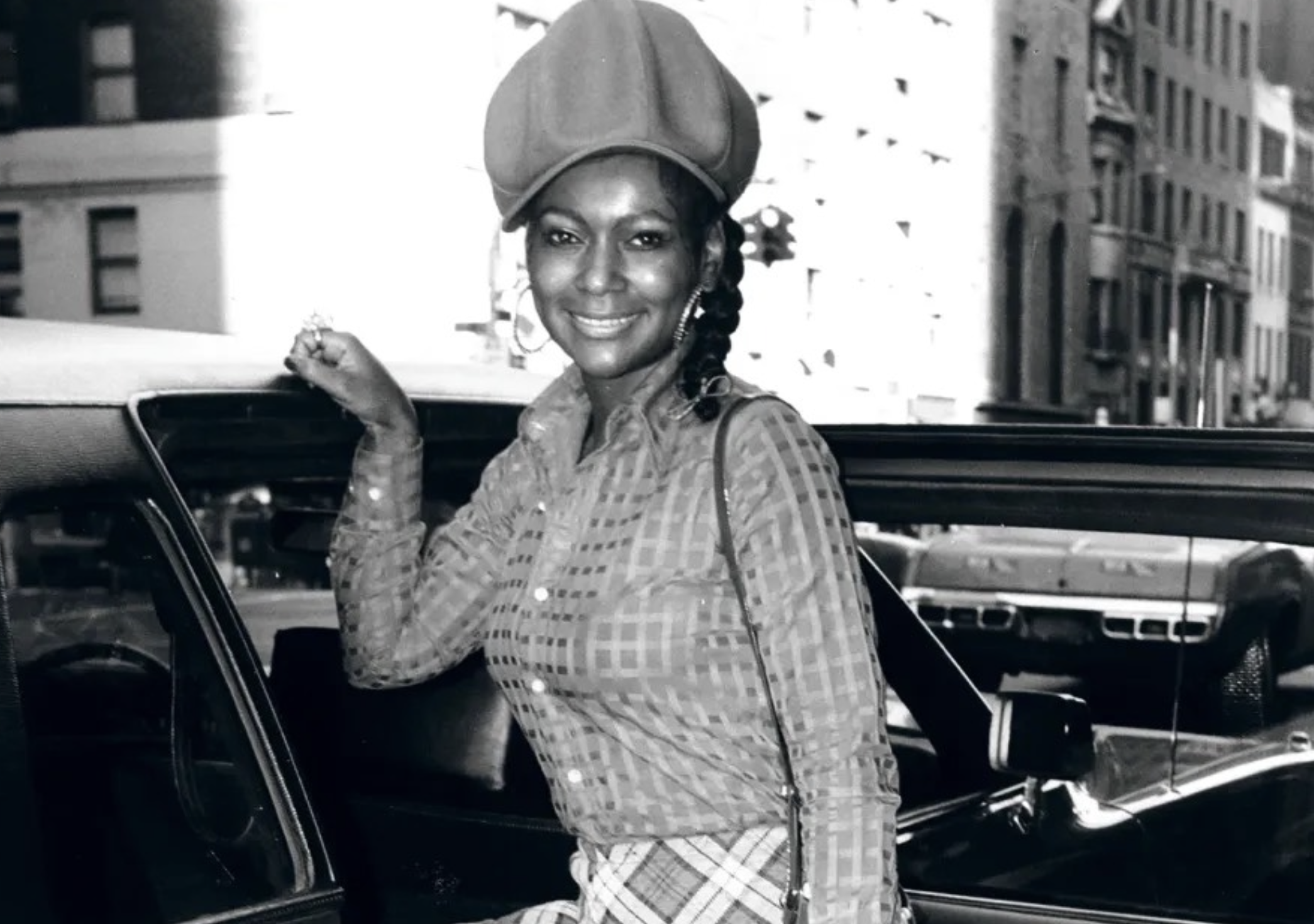
Sylvia Vanterpool was born on 29 May 1935 in Harlem, New York City. Growing up amongst the melting pot of jazz, gospel and early rhythm & blues of the time, Sylvia was determined at an early age to become part of the music surrounding her. Leaving school at 14, she began to sing for a living. Signed by Columbia Records at 15 as ‘Little Sylvia’, she recorded a string of singles without any notable success.
Sylvia had all but given up on music, taking a typist job at Metropolitan Life and weighing up a career in nursing – but instead, she took control her career, and decided to learn to write by learning guitar. Her teacher, Mickey Baker, was a busy session guitarist who teamed up with his talented student to form the duo Mickey & Sylvia.
Released in 1956, their single ‘Love Is Strange’ became a hit in early 1957, reaching Number 1 on the R&B chart and Number 11 on the more mainstream Hot 100. Sylvia would rework lyrics and shape their act, with ambitions beyond performing, and when they was unable to recreate the same success of their hit, the duo split by 1958. After marrying businessman Joseph Robinson in 1959, she took the name Sylvia Robinson and pursued a solo career, where could write and produce.
Read up on all the latest features and columns here.
Robinson produced Joe Jones’ 1960 hit ‘You Talk Too Much’, which reached Number 3, but she never received credit. In 1961, Ike & Tina Turner’s single ‘It’s Gonna Work Out Fine’ went to Number 2 on the R&B charts and Number 14 on the Hot 100. Robinson played guitar on the session and also produced the track but, once again, did not receive credit for doing so. “I paid for the session, taught Tina the song; that’s me playing guitar,” Robinson said in a 1981 interview with the trade magazine Black Radio Exclusive.
Tired of not getting the recognition she felt she deserved, Robinson and her husband formed their own independent label, All Platinum Records in 1967, and with it, their own studio, Soul Sound Studios. The space gave Sylvia the space to produce, alongside running the label’s creative side. They enjoyed some success, with Robinson co-writing and producing many of the label’s songs, including Moments’ ‘Love on a Two-Way Street’, a Number 1 R&B smash in 1970, and wrote and produced Shirley & Company’s ‘Shame, Shame, Shame’, an early disco hit in 1974.
After Robinson sent a song she had composed to Al Green, who rejected it as too risqué, she decided to get back behind the microphone herself. Complete with sexy moaning, 1973’s ‘Pillow Talk’ reached Number 1 on the R&B charts, Number 3 on the Hot 100 and Number 14 in the UK. It sold 500,000 copies and earned Robinson a Grammy nomination for Best Female R&B Vocal Performance. Despite the success, financial mismanagement on Joe’s part forced the label to close.
When Robinson threw a party for her 43rd birthday, she invited a local DJ to play, who brought an MC with him. There was no name for this kind of mash-up at the time but what Robinson heard was the future.
“As I was sitting there, the deejay was playing music and talking over the music, and the kids were going crazy. All of a sudden, something said to me, ‘Put something like that on a record, and it will be the biggest thing.’ I didn’t even know you called it rap.”
In 1979, along with her husband, she founded Sugar Hill Records. Robinson quickly assembled a group of MCs – the Sugarhill Gang – to record over the bassline from Chic’s ‘Good Times’, re-played in the studio by session musicians rather than sampled. Legend has it the group took an hour off work, recorded the track in one take and went back to their jobs. Session bassist Chip Shearin has said his job was to play the bassline “for 15 minutes straight”. The result, ‘Rapper’s Delight’, was groundbreaking: the first rap single to reach the Billboard Hot 100, climbing to Number 36, the first Top 40 song in the US to be sold only as a 12-inch extended version and what many consider the first commercial rap song in history. At its peak it was selling over 50,000 copies per day.
Also in 1979, Robinson produced ‘Funk You Up’ by The Sequence, the first all-female rap group, which featured later solo R&B star Angie Stone.
Determined not to have just a one-hit wonder on the label, Robinson brought in South Bronx group Grandmaster Flash and the Furious Five, urging them to tackle grittier subject matter. The result was 1982’s ‘The Message’, often ranked at Number 1 on lists of the greatest rap songs ever, and the record that brought social commentary and real-world themes to hip hop for the first time.
This earned Robinson the nickname ‘The Mother of Hip Hop’.
By the mid-1980s, Robinson’s tough reputation and even tougher business dealings – perhaps forged by her earlier lack of recognition – brought trouble to the label, which was rocked by lawsuits and controversy. Members of the Sugarhill Gang complained of not receiving royalty payments, Chic sued for breach of copyright and tougher-sounding hip hop labels such as Def Jam and Tommy Boy emerged. Sugar Hill now sounded dated and began to decline.
As Joe Robinson’s health failed, Sylvia was left running the label on her own, and these factors led to the eventual sale of Sugar Hill to Rhino Records in 1995.
Sylvia passed away on 29 September 2011 at the age of 76. In 2022 she was finally given some well-earned recognition, inducted into the Rock and Roll Hall of Fame via the Ahmet Ertegun Award ‘for being a major influence on the creative development of hip-hop’s early successes’.
After giving us hip hop, the first female rappers and a template for women in the music business, and helping to create a genre, it’s astonishing that Sylvia Robinson is not a household name. The Mother of Hip Hop, rockin’ to a rhythm that just don’t stop.