Exploring the production genius of the Fifth Beatle.
George Martin once said of the Beatles “They’re just great musicians and great writers, like Gershwin or Rodgers and Hammerstein. They are there in history and the Beatles are there in history too. They’ll be there (remembered) in 100 years but I won’t be.”
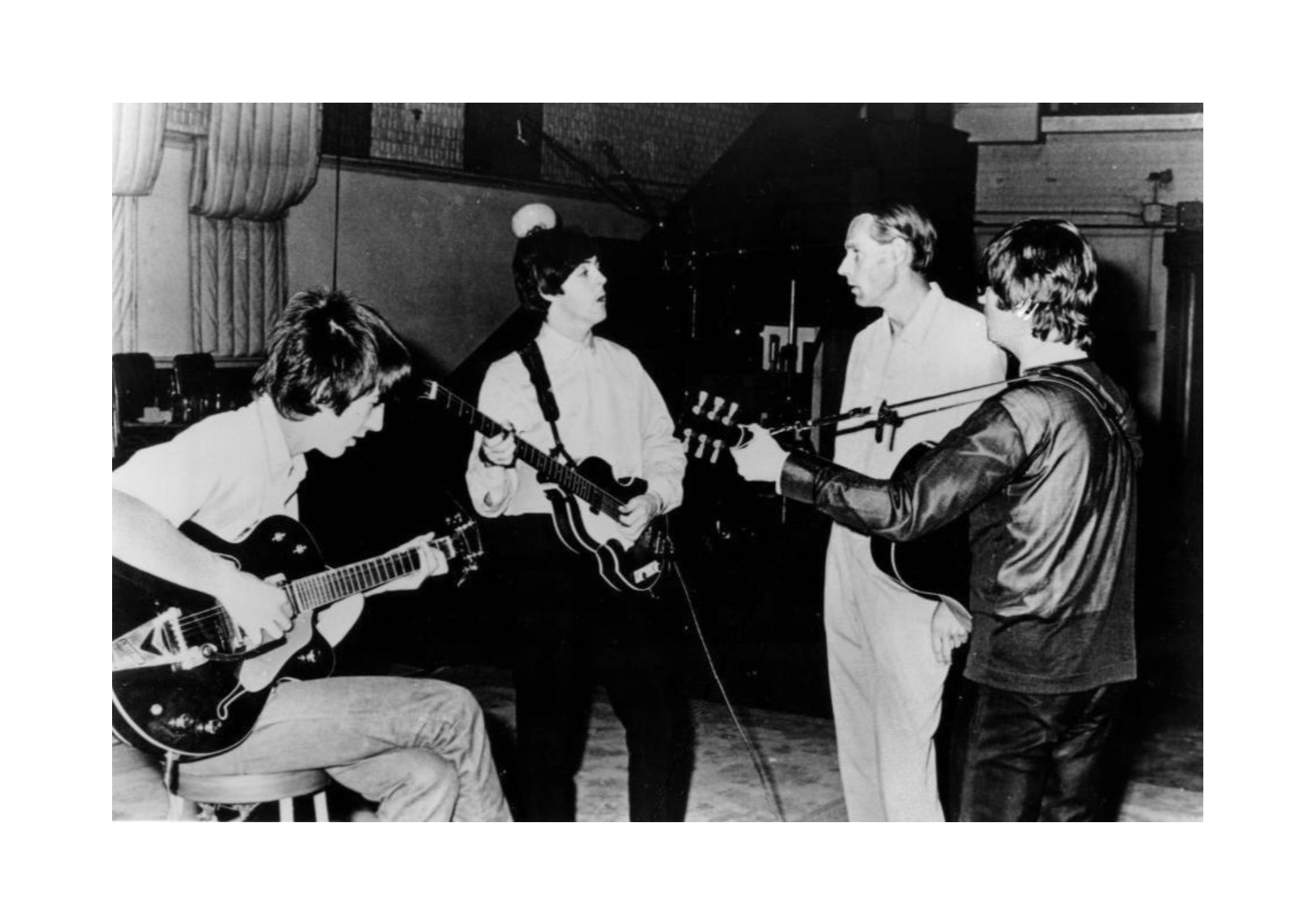
Humble words indeed, considering over 500 million Beatles albums have already been sold, making them the highest-selling musical artists of all time and arguably the most listened to. While the four Beatles were the musicians who wrote and played the songs, as their producer, Martin shaped their sound and spearheaded their groundbreaking innovations. This earned him the title of “The Fifth Beatle” and cemented his place as the most famous music producer in history.
Born January 3, 1926 in London, Martin showed an interest in the piano from the age of eight, teaching himself to play and compose songs. He played at dances and put the money he earned towards formal training in music theory. During WW2, he signed up for a military career. The war ended before he saw action and he left the Navy in 1947.
Returning to music, he studied piano and oboe at London’s prestigious Guildhall School of Music and Drama. In 1950, Martin began working at the record company EMI, managing the flagging Parlophone label, which featured mostly classical music. Forward thinking, he suggested the company abandon the 78rpm shellac format for the recently invented longer-playing 33 1/3 rpm vinyl records. When his boss left the label in 1955, Martin took over, producing some local hits, including a number one UK song “You’re Driving Me Crazy” by the Temperance Seven, and also recorded many popular UK comedians. These ventures turned Parlophone into a profitable label in comedy, classical and novelty songs.
Again, with one eye on the future, Martin dreamed of finding a rock n’ roll band that could expand the profile of the label even further.
Read up on all the latest features and columns here.
Shopping his new group around for a record deal, the Beatles’ manager Brian Epstein had already been rejected by several companies, including at Decca Records, where A&R man Dick Rowe famously turned them down with “guitar groups are on their way out, Mr. Epstein.”
A demo eventually found its way to George Martin at EMI’s Parlophone label, and though Martin was initially unimpressed, he signed the group. He would remain their producer for the rest of their career. In just eight years and with only around 10 hours of recorded music, Martin’s production of the Beatles would influence countless music fans.
So, what makes his production so special?
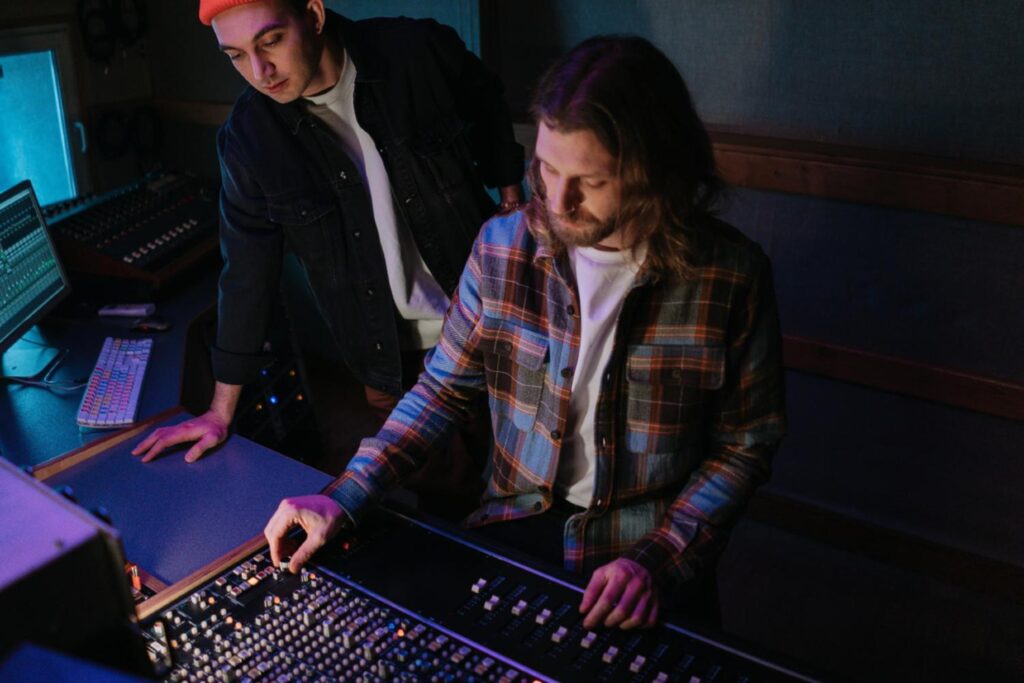
In the early 1960s, studios were equipped with two-track recording machines, so when played back, one speaker is for your right ear and the other for your left. Usually, all the vocals were recorded onto track one and all the instruments onto track two. This meant that most recordings were done by a band playing live, and left little, if any, room for adding other sounds. Martin recorded the first Beatles album using this process.
In 1963, the four-track recording console came to Abbey Road studios. This allowed more possibilities for adding other instruments and sounds to recordings. By then, the Beatles had become so successful that they were given unlimited studio time for free, and the group constantly wanted to add new ideas.
Martin began to use unconventional techniques with the band – adding classical elements such as strings, putting vocals through unusual speakers and recording world music instruments like the sitar and tabla. He also used different mic placement techniques, backward tapes and varying tape speeds. Listen to the solo on the Beatles’ “In My Life” from Rubber Soul and it sounds much like a harpsichord, when in fact Martin played it on a piano, recorded at half speed, and when sped up it created a unique “baroque style” timbre.
In 1966, Ken Townsend, an engineer at Abbey Road under Martin’s wing, invented Automatic Double Tracking, or ADT. The technique lets a vocal be “double tracked” – thickened by using a second tape machine to recreate it – without the singer having to record the part twice. Lennon’s “Tomorrow Never Knows” on Revolver is a great example, and ADT is now a common recording technique in modern studios.
By the time the group recorded Sgt. Pepper’s Lonely Hearts Club Band in 1967, a huge array of sounds could be heard, including animals, tape echo, compression, French horns, crowd noises and even a 40-piece orchestra. Martin’s production said “anything is possible” and opened the door for all professional and home studio boffins to follow.
Martin also produced other notable artists such as Gerry & The Pacemakers, Cilla Black, Cheap Trick, Jeff Beck and America. He scored the James Bond film Live and Let Die, producing Paul McCartney and Wings’ title theme.
When George Martin passed away on March 8, 2016 at the age of 90, his production credits included 30 number one songs in the UK, 23 in the US, six Grammy Awards and a 1996 knighthood for “services to the music industry and popular culture.”
Of all his talents, perhaps the most impressive were his abilities to collaborate and innovate. Never settling for repeating something that had worked in the past, Martin spent his career moving forwards, striving to make the music he produced fresh and inventive.
“Music was pretty well my whole life,” Martin once said, and his legacy continues to bring joy to music fans everywhere. Well played, Sir George!