This hardware plugin lets guitarists integrate modular synths and effects processors into their pedalboard signal chain with CV control and expression pedal compatibility.
Here we are, in 2026, and guitarists are still finding themselves in a quandary over how to easily and effectively navigate the world of DAW effects without losing tonal quality or affecting workflow. Well, not all guitarists. There are the lucky ones who’ve discovered something new and are already moving into a new world of effects processing. The rest of you? Well, you’re about to find out. Let me introduce you to the Electro-Harmonix Effects Interface.
Read all the latest features, columns and more here.
What is it? An effects pedal? An audio interface? Some sort of digital voodoo? Well, the answer is yes. Just yes. It’s all of that and a whole lot more. The best part is, you can play guitar connected to a computer, yet still feel confident wearing your old, moth-ridden Big Muff T-shirt without fear of reprisals from your all-analogue mates. Yes, this is the guitar interface with feeling. And if you’re not entirely buying that, you can just hide it amongst the host of clunky old pedals on your pedalboard, and no one else will ever know the difference.
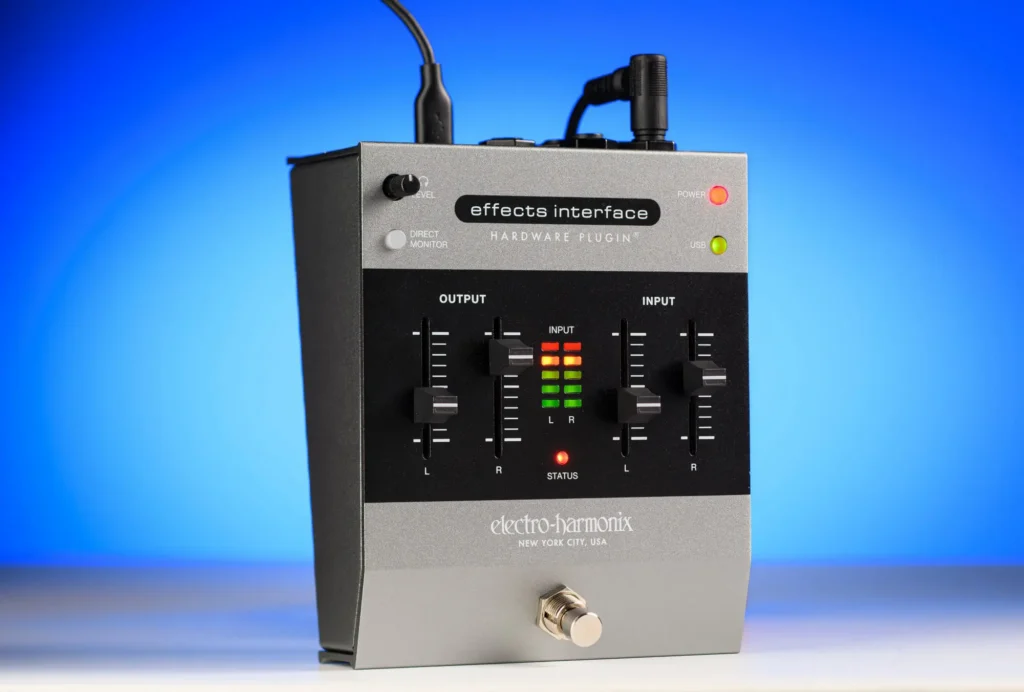
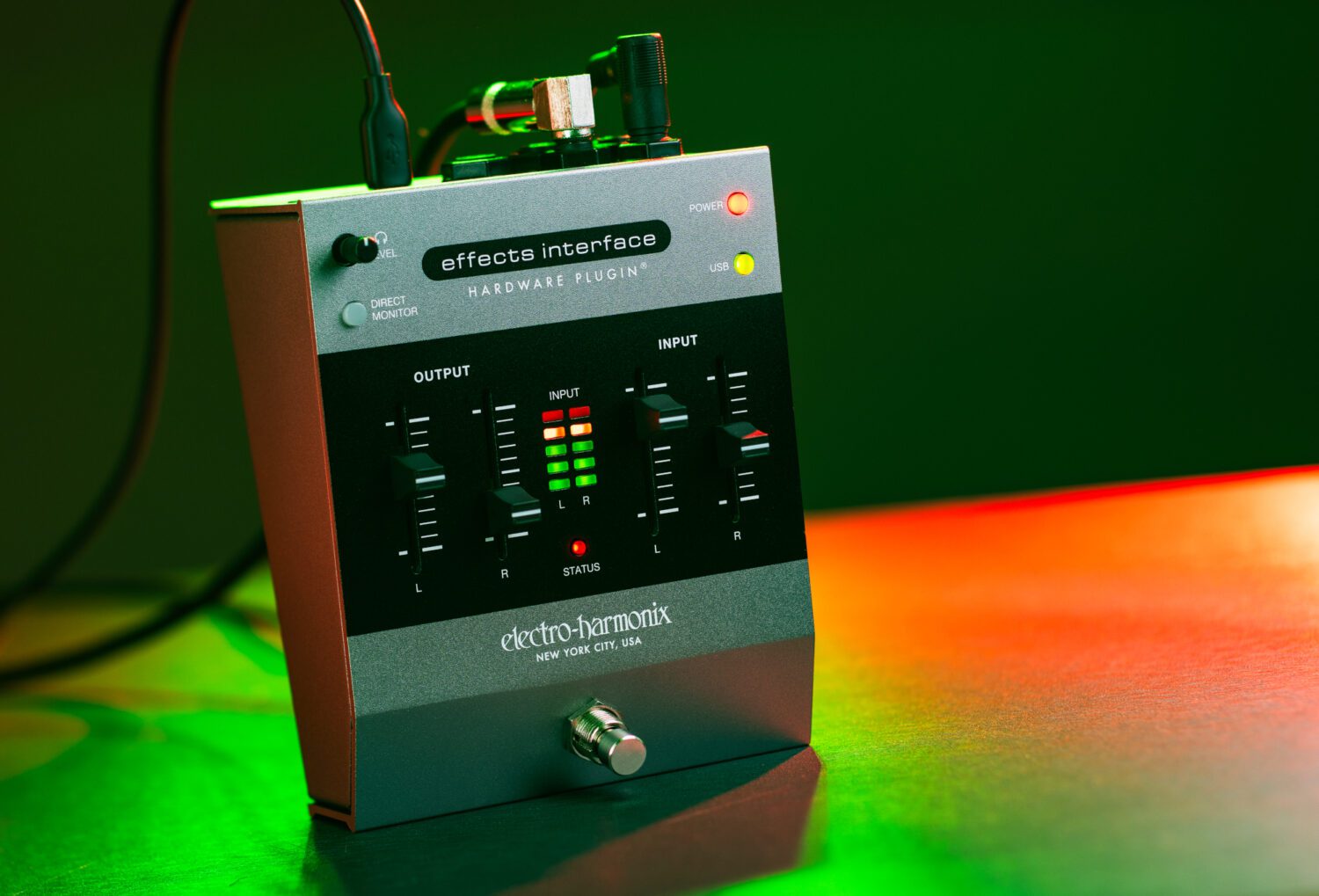
So, how does this effects interface work, and what is it going to bring to your guitar rig that you couldn’t get from it previously? Essentially, this unit offers three distinct modes of working, or routing signals to achieve different results, depending on your current needs. We’ll look at each mode individually in a moment—but what’s important to note first is that Electro-Harmonix have removed the need for external audio interfaces, which end up balancing on the end of your amplifier, or getting trashed on the floor of the stage or studio. This is all built into a rock-solid pedal unit, so it makes sense to have it mounted on your existing pedalboard where it can be utilised at any time.
Common sense would see it situated in the centre of the board; from there, you can wire it up for the different modes with a quick switching of cables between studio and stage use. It’s not a unit that definitely has to go at one end of the signal chain, or the other. In fact, it has a use at both ends. Of course, if you’re using a pedal switching system, then placing it at the end of the signal chain would work quite nicely, with the option to route back into the start of the chain when needed.
That option would be called upon for the first of the operating scenarios, when the interface is set to Hardware Plugin Mode. This is going to be a brilliant tool in the studio, where it allows you to route a signal from your DAW through the unit and any subsequent pedals on your board you might want to apply. What this means is you can record your guitar tracks clean and then feed them back through your pedals to allow for endless hours of tweaking and adjusting effects until you find the perfect tone. After all, it’s nice to use a Tube Screamer plugin, but does it have the same tone as the one on your board that’s chipped, modded, and operating on the last few percent of an old 9-volt battery that’s about to give up the ghost? The digital replica just won’t deliver that same tone to your recording. But now you can have it, with clear A/D conversion that delivers all the tone and subtle nuances that your specific effects offer.
Of course, there are times when you want the consistency and clarity of digital effects on your side. That’s when the second operating scenario comes into play, with Pedalboard Mode. In a nutshell, it’s the same thing, except reversed. Here, you’re able to integrate your DAW and its native effects into your pedalboard signal chain before it gets to the amplifier. So, in the studio, or on stage with a laptop, you can harness the power of all those effects you’ve been hoarding in your plugins folder, and run your guitar straight through them. Again, the brilliant A/D converters mean you get crystal clear audio running in and out of the computer with imperceptible latency. It basically makes your laptop the most powerful multi-effects board you can find and still allows you to include all your pedals in the signal chain too. After all, how many distortion pedals stacked in a signal chain is too many?
But what happens when you just want to record all night, without the volume of your amplifiers keeping the entire neighbourhood up? That’s when the third scenario is ideal, and switching into Audio Interface Mode delivers the perfect setup in a flash. Here, the effects interface operates like a conventional 2-in / 2-out audio interface for recording dual mono or stereo signals. That means you can take the output of the last stereo effect in your signal chain and patch that into the effects interface to capture your creative moments late into the night, all the while monitoring from a set of cans or low-volume studio monitors. It also means that other instruments can be brought into the game, especially synthesizers, which would just love to take a detour through a pedal or two on the way into your DAW. And when you think of it like that, it begins to open up a whole new world of effects mangling possibilities—and that’s even before we consider strapping a MIDI pickup onto the guitar.
If you’ve been chasing the perfect way to have your computer talk to your guitar, and have your guitar talk to your computer while inviting your effects pedal into the conversation, this is the social lubrication that you’ve been searching for. Have a look at the Electro-Harmonix Effects Interface for yourself, and you’ll see just how much this unit has going for itself.
For local enquiries on Electro-Harmonix, head here.