Inside the guitars, amps and pedals behind Interpol, from Daniel Kessler's Casinos and Gretsch to Paul Banks' Les Paul and RAT.
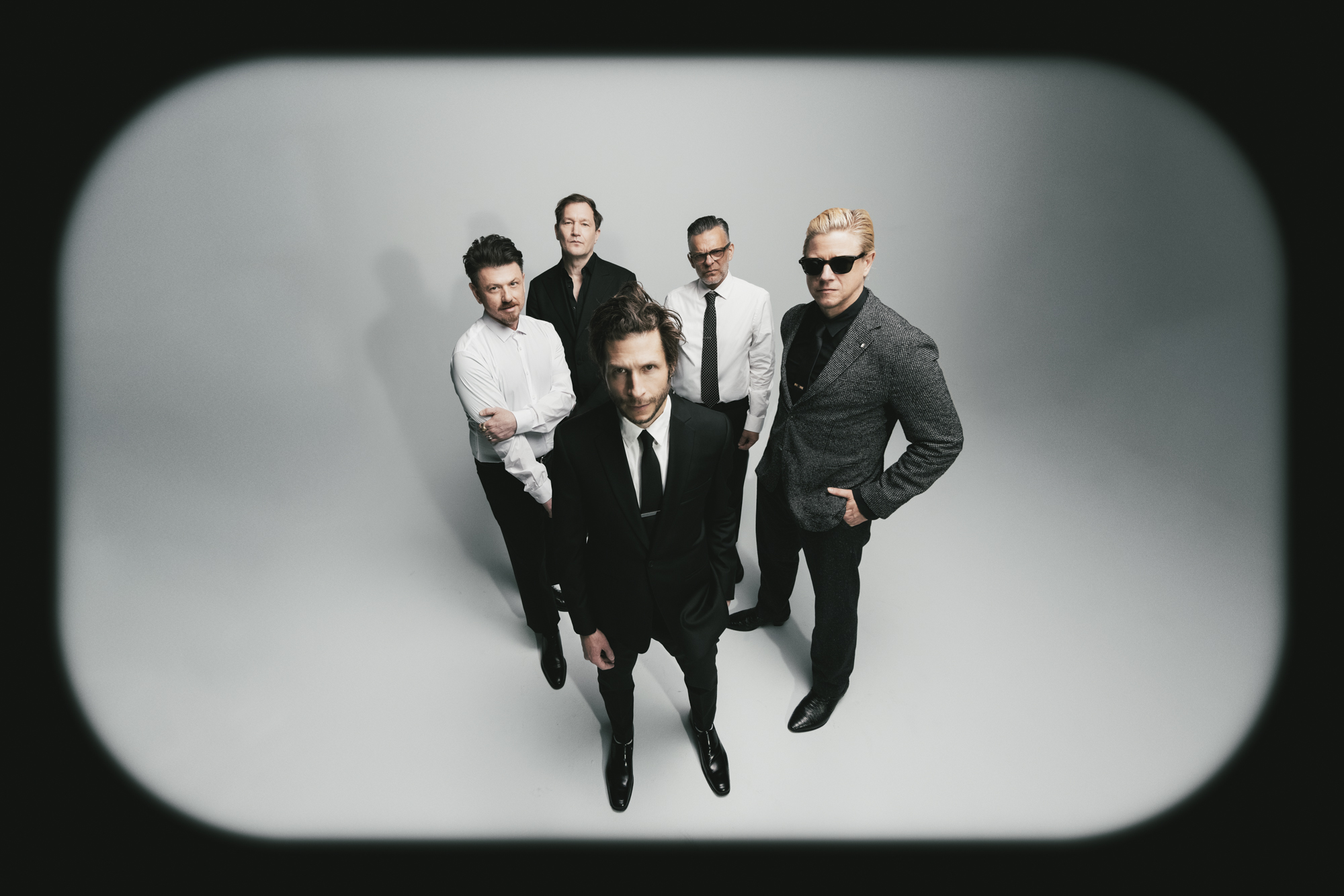
Formed in New York in 1997, Interpol became one of the defining acts of the 2000s post-punk revival, their debut Turn On the Bright Lights drawing comparisons to Joy Division and Echo and the Bunnymen. Paul Banks on vocals and rhythm guitar and Daniel Kessler on lead guitar have been constant since the start, with Sam Fogarino joining on drums in 2000 and founding bassist Carlos Dengler playing on the first four albums before leaving in 2010. Much of the band’s character comes from the interplay between Kessler’s ringing, effect-laden lines and Banks’ heavier rhythm work, laid over Fogarino’s snare-forward drumming.
Check out more rundowns from the archives here.
Daniel Kessler
Kessler’s tone comes largely from hollow and semi-hollow guitars with famously weak output, dressed up with reverb and overdrive.
Epiphone Casino
A Casino has been in Kessler’s hands since the beginning. In a 2015 interview, he told MusicRadar, “I have a 1967 Casino for some of our older songs. I’ve been using Casinos since Turn On The Bright Lights.” The ’67 he plays now is a replacement – the original, used all over the debut, was stolen from a dressing room years ago. “I don’t have my original Epiphone Casino anymore. It was stolen out of a dressing room. I was really heartbroken,” he told Guitar World.
1960 Gretsch Anniversary
Kessler has said the 1960 Gretsch Anniversary and the Casino are the only two guitars he’s played across his entire time in the band. He used the Gretsch on almost every song of El Pintor and much of the self-titled fourth album. The low output has shaped the way he’s worked across records, using effects to fill out the sound, having said “the Anniversary has a very weak signal.”
Gibson ES-330
Kessler has also been seen with a cherry Gibson ES-330, reportedly brought out as a heavier backup for the riffier songs like The Heinrich Maneuver, and said to have first appeared on the Our Love to Admire tour in 2007.
Fender ’65 Twin Reverb
Kessler tours with a Fender ’65 Twin Reverb, chasing a slightly dirty, throwback 60s reverb sound. He’d rather use the old Fender Princeton he records with, but as he’s said, it’s too fragile to take on the road.
Pedals
For effects, he keeps to a couple of overdrives, a Boss DD-5 delay and an Eventide Space reverb, which he rates over analogue units. Later boards have reportedly added a Klon-style overdrive, an Xotic EP Booster and a ZVEX Super Hard On. Photos from the 2026 tour appear to show a Benson Delay in use on the new material, though that one is yet to be confirmed by the band.
Paul Banks
Banks goes for the heavier rhythm side, mostly using his trusty guitar from his school days.
Gibson Les Paul Custom
His main instrument is a black Les Paul Custom. “I’ve owned my Les Paul Custom ever since high school, all those years ago. It’s been my setup since day one and it’s all I pretty much use to this day,” he told MusicRadar in the same 2015 rig tour.
Fender Jaguar
Alongside it he keeps a black Fender Jaguar, reportedly a 1962 reissue, for parts that call for a whammy bar. He’s put the choice down to childhood heroes – “the Jaguars are, I think, because of Kurt Cobain and John Frusciante as a child,” he said in a 2012 interview.
Gibson Flying V
A Flying V has turned up live too, for no reason deeper than it being “the coolest looking of all guitars.” He’s right.
Fender amps
Fender amps have carried his sound throughout, with photos of his rig showing a Pro Reverb and a Hot Rod DeVille 212 through the early years. The band switched the amp reverb off early on in favour of pedals, since, as Banks has put it, the built-in reverb “makes a fucking racket on shaky stages.”
Pedals
His board is busier than Kessler’s. He’s talked about liking a juicier tone from an MXR Micro Amp, and has been seen over the years with a Pro Co RAT 2 distortion and an EHX Micro POG for octaves, alongside a rotating set of delays.
Carlos Dengler
Dengler’s driving basslines are a big part of the early records. Since his 2010 departure Banks has taken care of bass on the studio albums, with longtime touring player Brad Truax now taking the role live and, from the new record, on tape.
Fender American Standard Jazz Bass
Dengler has been seen playing a black Fender American Standard Jazz Bass, the backbone of the low end across the first four albums.
Ampeg SVT rig
Live, he ran the Jazz through a full Ampeg SVT stack, photographed on stage as an SVT-CL Classic head into an SVT-810E 8×10 cab.
Sam Fogarino
Fogarino’s snare-heavy feel drives the band, and his kit stays fairly straightforward.
Ludwig Classic Maple
According to a MusicRadar breakdown of his setup, he plays a Ludwig Classic Maple set – a 26×14 kick, 14×11 rack tom and 16×16 floor tom.
Ludwig Black Beauty
The same breakdown lists his snare as a 14×6.5 Ludwig Black Beauty or a custom chrome and brass drum.
Vic Firth 5B
He keeps time with Vic Firth 5B sticks, using them “occasionally reversed”.
In the studio
Some of the debut’s atmosphere came from a cheap studio box rather than a guitar. Producer Peter Katis, who worked on the first two albums, put much of it down to an Alesis Microverb: “Cheaper reverbs have a sound that is darker and messier and cooler… Without that little $50 piece of gear, the record would’ve sounded totally different.”