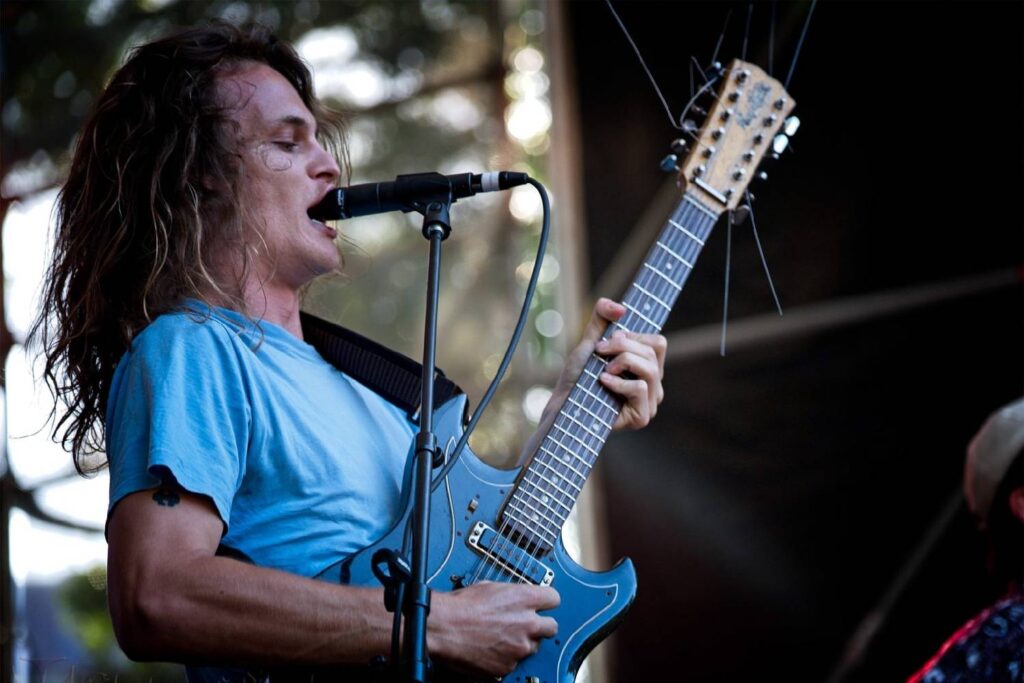
The bluegrass star’s live setup pairs a 1940 Martin D-28 with a Kemper, more than 20 effects and a signature Chase Bliss Wombtone.
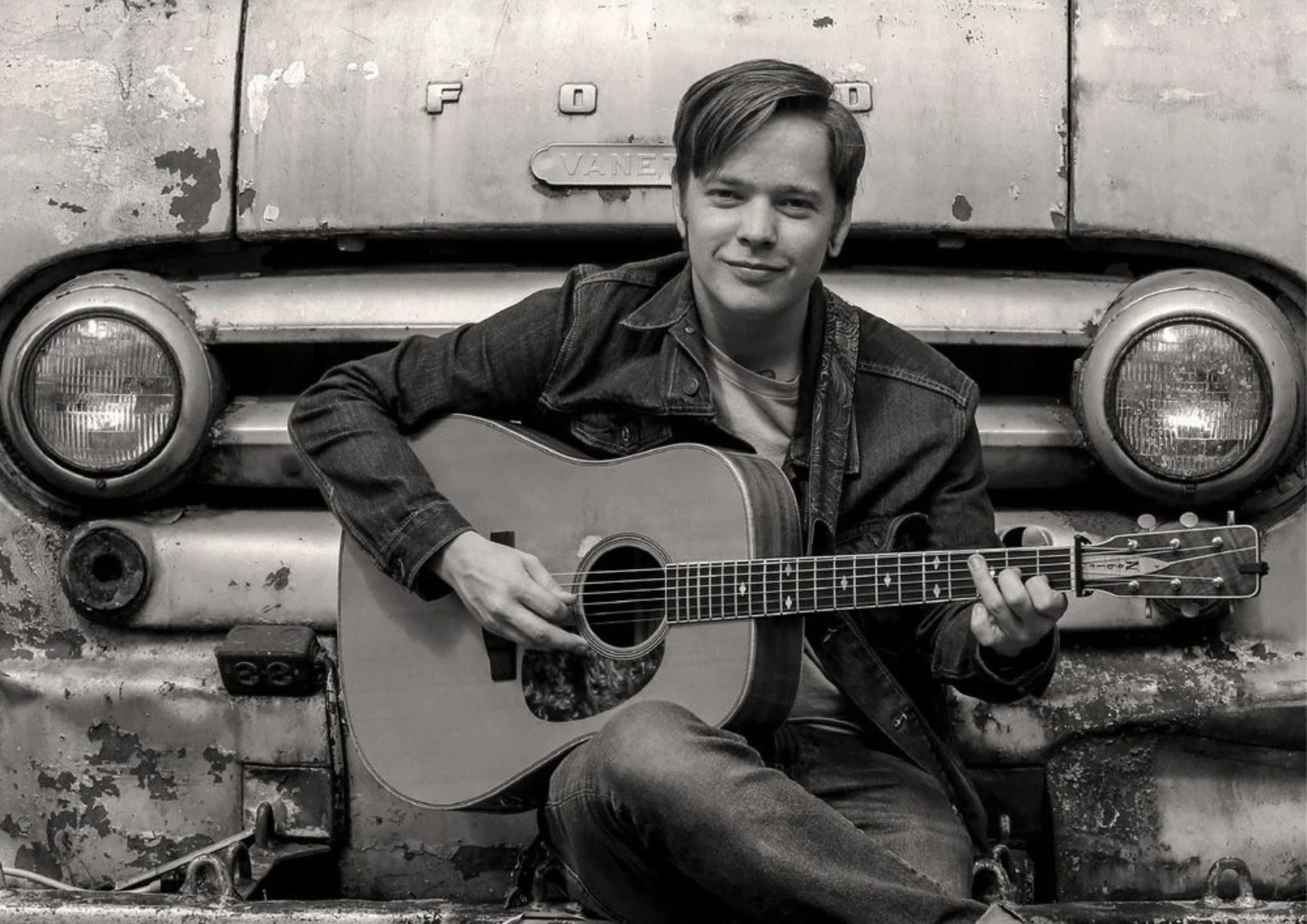
Billy Strings was born William Apostol and grew up in Michigan learning bluegrass alongside his dad, spending much of his childhood watching him play a Martin before a teenage detour into bands inspired by Cryptopsy and Cannibal Corpse. The metal never fully left him, and his shows now move between four players gathered around a single microphone and long psychedelic jams where an acoustic dreadnought is pushed through a high-gain amp profile and more than 20 effects.
Read up on all the latest features and columns here.
His fifth album, So Much for Goodbyes, came out in August through Reprise, co-produced with T Bone Burnett, and follows Highway Prayers, which won Best Bluegrass Album at this year’s Grammys.
2017 Preston Thompson D-BA ‘Frankenstein’
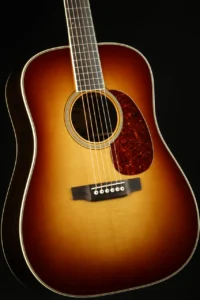
Strings found his first Preston Thompson at Carter Vintage Guitars in Nashville and played a mahogany model for about two years before ordering this Brazilian rosewood and spruce dreadnought, which he collected from the Thompson workshop in Sisters, Oregon in 2017. It goes by two names, Old Faithful for its years of service and Frankenstein for the pile of modifications it has picked up since.
The guitar has been smashed and put back together after years on the road, and its electronics have been pieced together over time too. A K&K Pure Mini, made up of three small transducers glued to the bridge plate, is blended with a K&K Double Helix humbucking soundhole pickup and a Shure clip-on condenser mounted inside the body, which sends a clean feed to front of house and his in-ears. Nashville tech Dave Johnson added a switch on the top that sends the soundhole pickup to his electric rig, letting him switch between a clean bluegrass break and a distorted solo without changing guitars, and every acoustic-electric he tours with is wired the same way.
He later had Thompson build a twin called The Bride, with identical specs and electronics in a charcoal sunburst. Lightning bolts run across the bridge and fretboard, and Elsa Lanchester’s Bride of Frankenstein is on the headstock. It’s often tuned down for the title track of Home.
Thompson also made a limited run of 33 Billy Strings Signature Model dreadnoughts with Adirondack spruce tops in his reddish sunburst, offered with either Brazilian or Indian rosewood back and sides. Strings asked for the jade-green torch inlay on the headstock and designed the logo, signing each guitar himself, and the first one went to his dad.
Martin D-28s
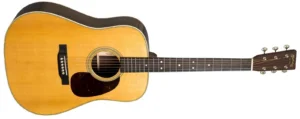
When the band huddles around one mic for the traditional tunes, out comes a 1940 Martin D-28 that rarely leaves his sight and travels back to the hotel with him each night. It isn’t going anywhere near a drill for pickups, and it served as the template for the Martin D-28 Billy Strings, announced in January 2025. The signature model uses a 25-inch scale rather than the 25.4 inches typical of Martin dreadnoughts, which Strings says gives it slightly less string tension, along with a 1 23/32-inch nut and a Modified Low Oval neck. An X Series D-X2E Billy Strings launched alongside it as the more affordable option.
Jody Payne, Willie Nelson’s longtime guitarist, owned the 1945 D-28 before Strings, and it arrived with a badly relocated bridge, extra holes, cracked binding and a hump in the neck. Dave Johnson rebuilt it with the full pickup system and the Martin Custom Shop reshaped the neck into a modified V. At Willie’s 90th birthday show at the Hollywood Bowl in 2023, harmonica player Mickey Raphael suggested Strings add some of Payne’s ashes to the guitar, which he did, and Payne has been on tour with him ever since. Strings describes his guitars as “both my tools and my children.”
The collection also includes a 1948 D-28 with double pickguards that once belonged to Bryan Sutton, and a heavily appointed custom D-45 fitted with the same mics and pickups as his touring guitars.
Casio DG-20 ‘Excalibur’
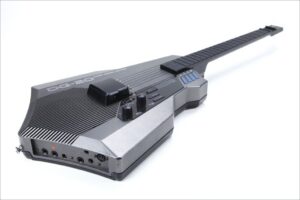
Excalibur is a 1980s Casio DG-20 digital guitar that started out closer to a toy than a stage instrument. Johnson made it gig-worthy by reworking the saddle and redoing the MIDI pickup for each string, and Strings has brought it out for ‘Boston Boi 3000’.
Johnson was also behind the restoration of an electric guitar Strings’ grandfather built in the woodshop at the Michigan State Penitentiary in the early 1960s. The body was cut from a cedar tabletop and the neck from one of its legs, topped with a Gibson acoustic fretboard, and with no truss rod the neck bowed as soon as steel strings went on. Strings spotted it in his grandmother’s closet as a kid, tracked it down years later in pieces at his uncle’s place and had it brought back to life.
From Fender Deluxe Reverb to Kemper
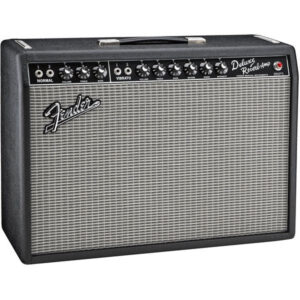
In 2019, the dirty sounds came from a Fender Deluxe Reverb that Strings took to every acoustic gig. His signal ran from a Grace Design BiX DI, modified so his tuner stays live when the output is muted, through a volume pedal, a Chase Bliss Brothers and a Boss GE-7 into the amp, which was blended in underneath the clean DI feed. Bluegrass purists didn’t love it, and they would have liked the next step even less, because by 2023 the amp had been replaced by a Kemper Profiler running a profile of the Soldano SLO-100, a high-gain amp that ties straight back to his metal days.
An RJM Mastermind GT MIDI controller switches the Kemper and pedals, while the Grace Design BiX still gives front of house a clean acoustic signal. Two Ernie Ball volume pedals bring in the Leslie sound and the Kemper, a pair of Mission Engineering SP-1 expression pedals manage the time-based and modulation effects, and a Peterson StroboStomp HD and TC Electronic Ditto looper complete the floor.
Pedals
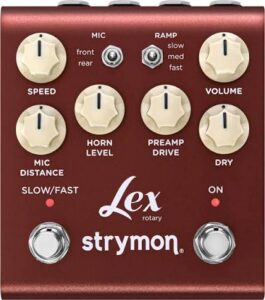
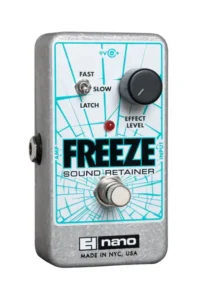
Between 2019 and 2023, the pedal count grew from ten to 21, spread across four rack drawers powered by Strymon Zuma and Ojai supplies. Pitch shifting accounts for a lot of the strangeness, with an Electro-Harmonix Micro POG, Pitch Fork and Intelligent Harmony Machine sharing space with a Boss SY-1 and Source Audio C4 synth. He has used the Micro POG and an EHX Freeze together to build a drone he can riff over on the way into or out of a song. For space, he uses a Source Audio Nemesis delay, Boss DD-8, DigiTech Polara reverb, Eventide H9, Red Panda Raster and a Chase Bliss Mood. A Strymon Lex covers the rotary sounds, and there’s also a Boss DC-2w Dimension C, Jam Pedals Waterfall, MXR Bass Envelope Filter, Voodoo Lab Sparkle Drive, NativeAudio Pretty Bird Woman and a Chase Bliss Automatone MKII Preamp.
Greensky Bluegrass’s Dave Bruzza introduced Strings to the Chase Bliss Wombtone, an analogue phaser, while the two were on tour together, and it has been part of his sound ever since. Once it was discontinued, Strings bought up every one he could find so he’d have spares, which caught the attention of Chase Bliss founder Joel Korte. Strings had been faking envelope control by moving an expression pedal in time with each note, so the Billy Strings Wombtone that followed in 2024 added real envelope control, along with a new slow mode, more headroom and Burr-Brown op-amps on the input. It was Chase Bliss’s first signature pedal, limited to 3,000 units and sold only in the US because its light-dependent resistor doesn’t meet UK and EU market access rules, so anyone in Australia after one will need to look second-hand.
Strings, picks and capos
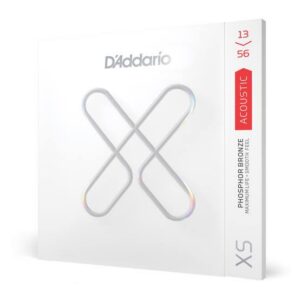
All his guitars are strung with D’Addario XS Phosphor Bronze mediums (.013–.056), which are coated to survive three-hour shows and the sweat that comes with them, with the heavier gauge suiting how hard he digs in. He uses Elliott capos exclusively, and his picks are BlueChip, listed as a TP48 Speed Bevel, the same model Bryan Sutton plays.
Read up on all the latest features and columns here.