Builders solder their own capture and IR player for guitar or bass, with four presets, a three-band EQ and every design file free to modify on GitHub.
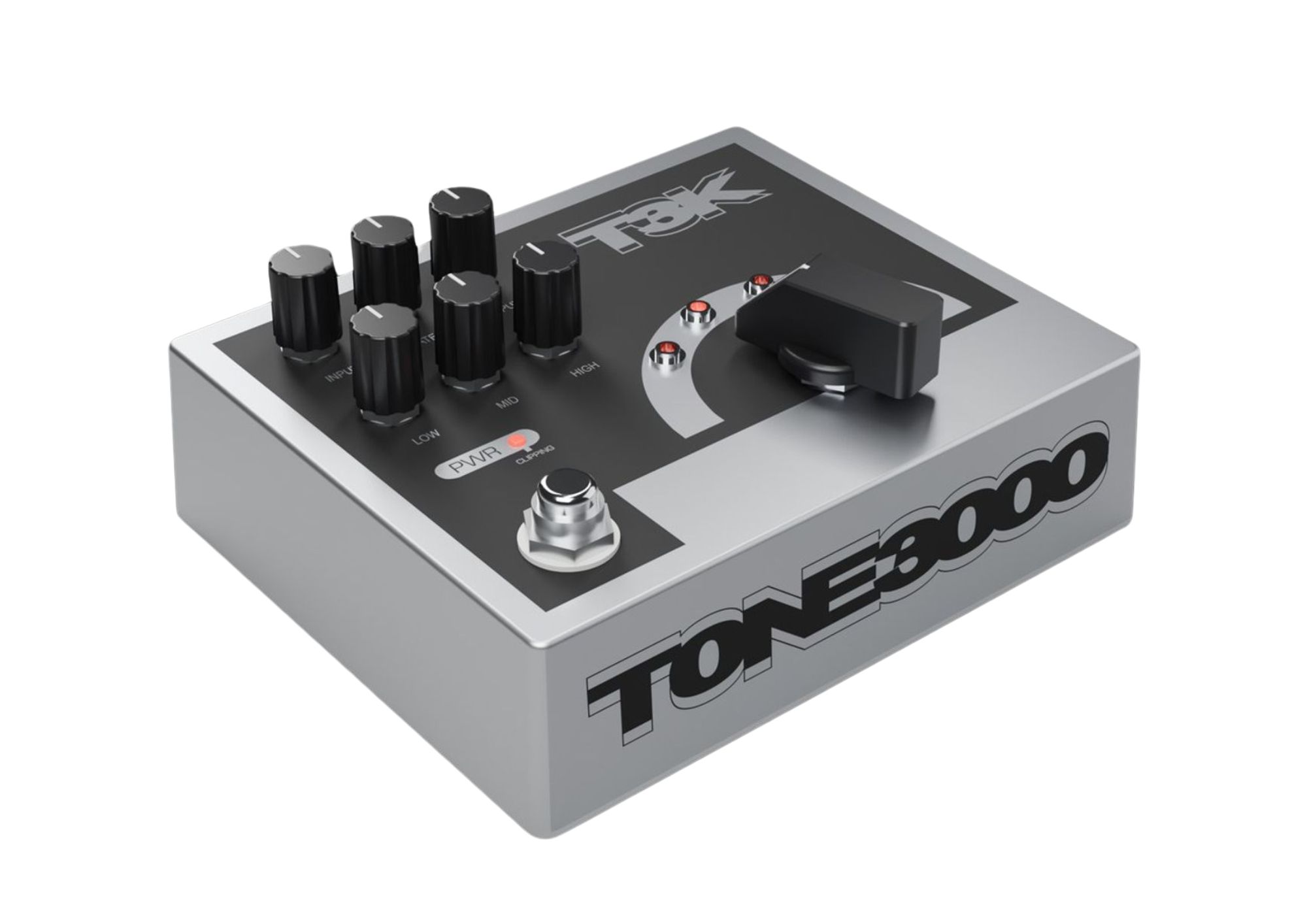
TONE3000 has teamed up with Daisy Audio on a DIY kit that turns a solid afternoon at the soldering bench into a working NAM A2 capture and impulse response player for guitar and bass. Everything behind it is open source, with the firmware, companion app, schematic, circuit board, drill template and bill of materials all published on GitHub under the MIT licence.
Catch up on all the latest news here.
Daisy’s Seed3 module acts as the pedal’s brain and is bought separately, while Tayda Electronics supplies the rest: the circuit board, a pre-drilled and printed aluminium enclosure and every component needed to finish the job. The enclosure is deliberately oversized as a nod to the original MXR boxes, which leaves room inside for anyone who wants to add their own mods.
Controls follow the same signal chain as the TONE3000 plugin, with six knobs covering input, output, a noise gate and a three-band EQ. There’s no screen, and the four presets are picked with a rotary switch, with an LED showing which one is active and the power LED flashing when the input or output clips. Each preset can run a single capture, a capture into a cab IR or two captures in series, so a Tube Screamer model could feed straight into a JCM800.
Tones go onto the pedal over USB-C through a browser-based companion app, where builders sign in to TONE3000, preview captures and flash them across. It runs A2-Lite, the hardware version of the NAM A2 format TONE3000 developed with NAM creator Steve Atkinson, and a single capture uses around 40 per cent of the Seed3’s processing, with two in series taking about 83 per cent.
“Every file is open, so a hobbyist can mod it and a company can use it as the blueprint for a product,” said TONE3000 co-founder and CTO Woodbury Shortridge, and the project is pitched as a starting kit for would-be pedal makers as much as tinkerers.
First-timers might want to warm up elsewhere, as the build runs to about 150 through-hole solder joints and 14 wires to the jacks, footswitch and rotary switch, and TONE3000 suggests it as a second or third project. Because it’s a community effort rather than a retail product, TONE3000 doesn’t sell, assemble or warranty the finished pedals, and help comes through its Discord, the Daisy forum and GitHub instead.
For more information, head here