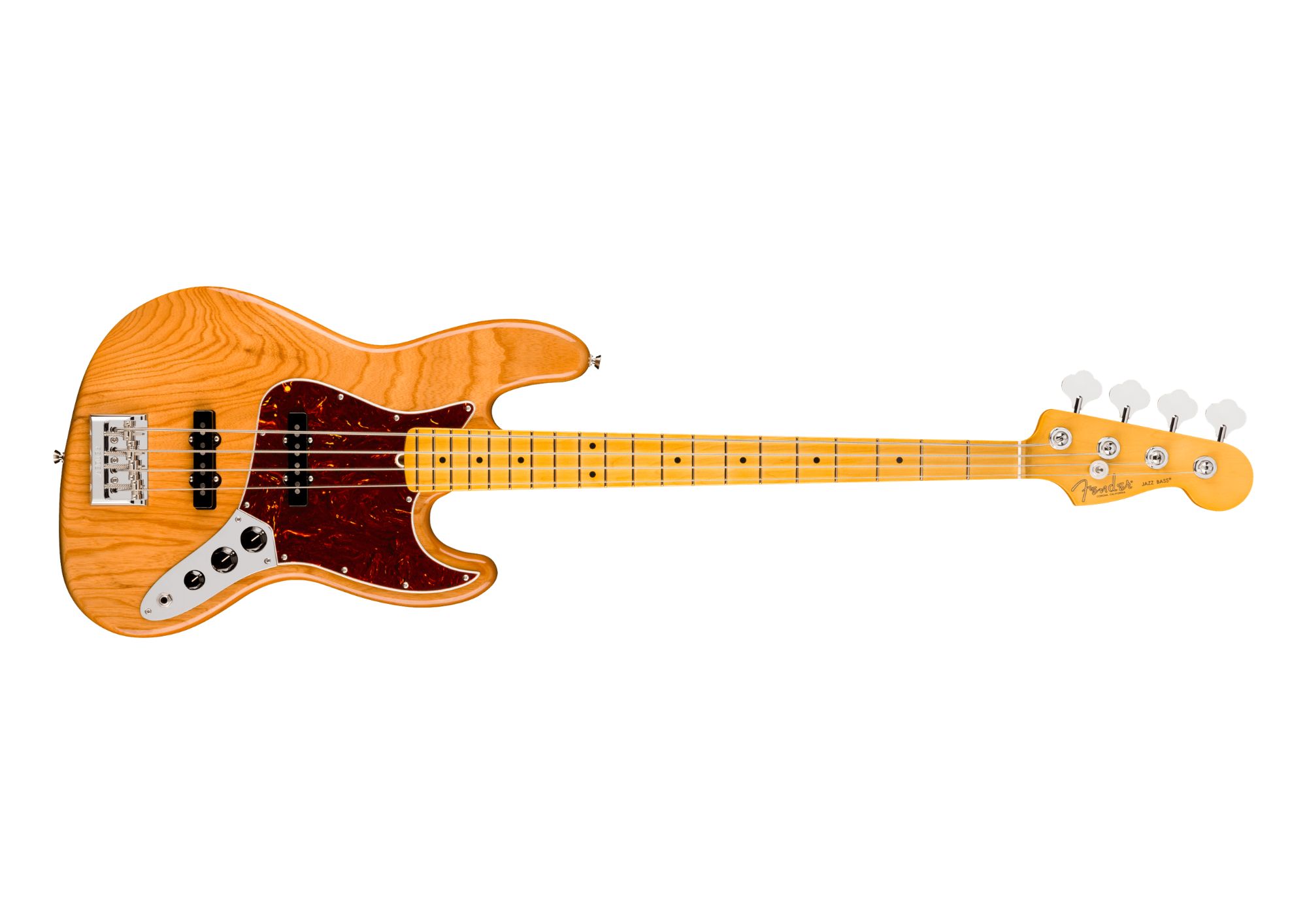
New V-Mod III pickups, a beefier HiMass Pro bridge and a newly sculpted heel make Fender’s flagship J easier to play and easier to dial in.
I’ll start by sharing some of my biases from the jump for complete transparency. My perfect bass is a Fender Jazz. I think it’s a beautiful, versatile instrument that suits pretty much any situation or genre. So, the chance to review the new third-generation American Professional Jazz is great, but you should know we’re coming in hot, with high-ish marks already. It’s been a minute since we saw an update to the American Professional (the last model was about six years ago), and while the tweaks are small, they make a real difference.
For the uninitiated, Leo Fender introduced the Jazz Bass in 1960 as a sleeker follow-up to the Precision, with an offset body, a narrower neck at the nut and two single-coil pickups, and the basic formula has barely changed since. The American Professional series is Fender’s flagship US production line, built in Corona, California, and this latest generation arrives alongside updated Precision Basses, Stratocasters, Telecasters, Jazzmasters and Jaguars.
Catch up on all the latest reviews here.
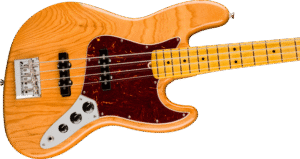
One reason I love a Jazz is that they feel both powerful and comfortable, and this new model takes that feeling even further. One big reason is the newly sculpted neck heel, which makes the upper register of the neck much easier to reach and generally makes the bass simpler to hold.
Sound-wise, players come to a Jazz for clarity, and the V-Mod III Jazz Bass single-coil pickups deliver it with plenty of punch. These pickups are voiced differently for each position and slightly overwound to ensure presence without losing that classic Fender vintage warmth. Three ClassicGear Precision potentiometers handle the two pickup volumes and a master tone, and the HiMass Pro bridge gives enough sustain to keep everyone happy. The pots also seem a lot easier to turn than on previous models, so tone or volume adjustments, no matter how gradual, are very comfortable, and you have a lot of control.
The neck has a Slim “C” profile with a 9.5″ radius, rolled fingerboard edges and a Super-Natural satin finish. It also features Posiflex graphite rods to keep your bass from being overly affected by hot (or cold) days.
If you’re familiar with older Jazz basses, most notably the American Standards, one of the first things you’ll likely notice about this new model is how much chunkier the HiMass Pro bridge is. It’s a great improvement, similar to a Leo Quan Badass, with lovely intonation, great resonance and easy adjustment. Weirdly, this bridge almost feels like a modification someone would make to have something heftier on an otherwise slim bass, but it’s here as a standard, and it’s pretty cool. You can top-load the strings or run them through the body (I personally prefer the body option for a fuller sound).
Fender has slightly overwound the V-Mod III pickups, which generally means a little more output, warmth and midrange push than a vintage-spec Jazz pickup, without giving up the clarity and brightness that drew most of us to a Jazz in the first place. A Fender Jazz is meant to be relatively easy to play (possibly why I, a guitarist first, enjoy them so); they should be somewhat plug-and-play, with a great tone that cuts through and a perfect bed to layer effects over, and the V-Mod IIIs definitely deliver that.
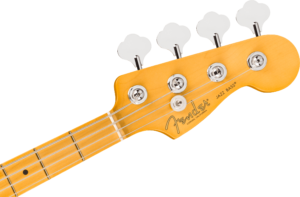
Beyond that new heel, the neck will feel familiar to anyone who’s played the previous models. You can choose between a rosewood or maple fingerboard, with narrow-tall frets and a genuine bone nut.
There’s a good spread of finishes too. The maple-board models come in Aged Cherry Burst, 3-Color Sunburst, Natural and Olympic White, while the rosewood versions come in 3-Color Sunburst, Dark Night, Oxblood and Olympic White, and if four strings aren’t enough, there’s a five-string Jazz Bass V as well, which comes in Oxblood with a maple board or Olympic White and 3-Color Sunburst with rosewood.
Playing with both pickups open all the way at full tone gives a bright, even sound that is consistent all the way up the neck. If you move to just the neck pickup, the Jazz starts to sound more like a Precision bass, bringing in a touch more grit and compression. While I’m not really a neck-pickup fella, I did like this tone, and it particularly mixed well when I clicked on my Plumes overdrive pedal. Soloing the bridge pickup gives you a leaner, more nasal sound with less low end than the neck pickup, which is great for cutting through a busy mix. It’s not my go-to, but it’s still a cool sound.
The tone control makes a much bigger difference than I expected. I’ve always felt there was a fair bit of sound diversity in a Jazz bass, but that feels amplified here. Gradually shifting the control gives a noticeable but smooth transition that I think you could have a lot of fun with while performing. It’s also going to be super handy to have so much tone variance when recording, and it couldn’t be easier to play around and find a sound you like.
If you’re looking for a vintage sound with a modern edge, Fender has got it right here, and the improvements to the new American Professional Jazz Bass make it feel like a bass for almost anyone. It’s easy to play and simple to pull a great sound from, and it’s possibly one of the most comfortable guitars I have ever held in my too-small-to-play-bass-well hands. Highly recommend.
For more information, head here