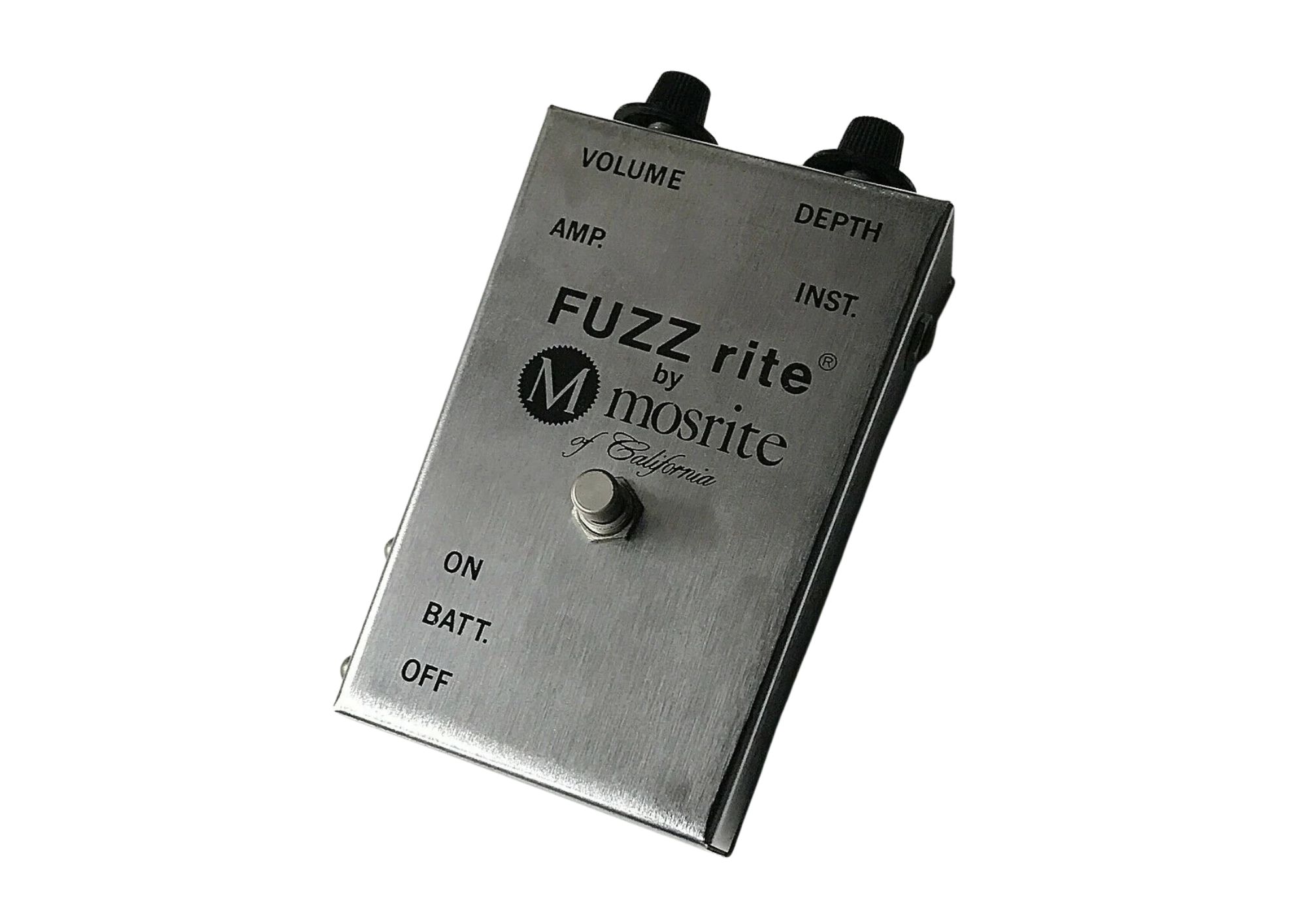
Built as a one-off for a steel guitar player, Ed Sanner’s fuzz for Mosrite became a staple of ’60s garage and psych rock.
Semie Moseley and his brother Andy started Mosrite in Bakersfield, California in 1956, with backing from Ray Boatright. By the mid-’60s the company’s guitars had found their way into the hands of a generation of instrumental rock players, largely thanks to its Ventures signature models. That connection started when Mosrite assembly-line inspector Eugene Moles met the band’s Nokie Edwards.
Around 1965, Ed Sanner was designing amplifier circuits for the company, and on the side he built a custom fuzzbox for steel guitar player Leo LeBlanc. Semie liked it enough to put it into production, and from the second half of 1966 Mosrite was shipping the two-knob Fuzzrite, a pedal that became a staple of American garage and psych rock.
Catch up on all the latest features here.
Germanium to silicon
The earliest Fuzzrites used a pair of germanium transistors, a 2N2613 and a 2N408. LeBlanc found his pedal misbehaved when it sat on a cold concrete floor, a problem that comes down to germanium’s sensitivity to temperature. Sanner later recalled that Mosrite had shipped around 200 units before switching to silicon, though he has put the figure at 250 elsewhere. At least one researcher who has documented surviving examples believes even more were made, but germanium Fuzzrites remain far rarer than the silicon pedals that followed.
By 1968 Mosrite had sped up assembly by housing much of the circuit in an orange encapsulated module supplied by Sprague Electric. The company also built silicon Fuzzrites for Guild that year, sold under Guild’s Foxey Lady name, before Electro-Harmonix took over that badge with its own designs.
How it works
The Fuzzrite has two controls, Volume and Depth. Inside are two near-identical transistor gain stages, and Depth blends between them. At its lowest setting only the first stage is heard, which gives a cleaner, fatter tone. Turning it up brings in the second stage, along with gated, sputtery textures and upper harmonics that edge towards ring modulation. A small capacitor in the signal path trims the low end wherever Depth is set, so an original Fuzzrite sounds thin and trebly next to a Fuzz Face or Big Muff but cuts through a band with ease. With the Volume set high, the pedal starts pushing the amp as well, which adds some body back into the sound.
On record
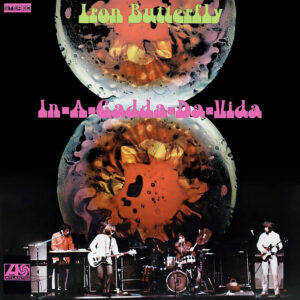
Iron Butterfly’s “In-A-Gadda-Da-Vida” is the recording most often tied to the Fuzzrite. Erik Brann was 17 when he recorded it in 1968 on a Mosrite Ventures model guitar. His fuzz has never been documented with certainty, but the Fuzzrite is widely believed to be behind that slow, heavy riff. Davie Allan & the Arrows’ biker-film instrumentals are regularly linked to it too, and The Black Keys are among the modern bands that have used the circuit since.
The Ventures get attached to the Fuzzrite more than anyone, usually through “The 2,000 Pound Bee”. That single came out in 1962, though, years before Mosrite was making fuzz pedals. Even Catalinbread, which makes the official reissue, concedes it’s unclear whether the band ever used an actual Fuzzrite.
After Mosrite
Mosrite went bankrupt in late 1968, and its stock and machinery went to public auction the following year along with the Mosrite name. Several hundred Fuzzrites, some complete and some in parts, were part of the sale. Most went to Semie’s brother, and Semie assembled pedals from that stock at his kitchen table through the ’70s once he was back to building guitars.
Sanner kept working on the design, swapping Depth for a tone filter on the Nu-Fuzz pedals he built under the Sierra and Rosac names in the ’70s. In the ’90s he made about 150 Sanner Fuzzrites for Front Porch Music, a Mosrite specialist shop in Bakersfield. One of those became the template for the Buzzrite, the first pedal Brisbane’s Tym Guitars ever made. In 2024, at 87, Sanner was still hand-building a small run of germanium Fuzzrites with Hallmark Guitars.
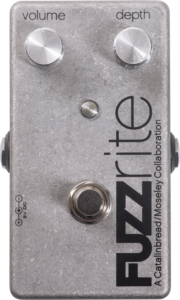
The official reissue comes from Portland’s Catalinbread. It worked with the Moseley estate and with Sanner, along with Mark Moseley, who built Fuzzrites as a kid working for his father Andy and uncle Semie. New old stock originals served as the benchmark. Catalinbread’s silicon Fuzzrite moves the controls to the top of the enclosure and adds 9V power. The Fuzzrite Germanium adds a Modern/Vintage toggle to bring back some of the low end the original cuts, and the Fuzzrite Mini fits the silicon circuit into a pedalboard-friendly case. Plenty of other builders have cloned the circuit too, including General Guitar Gadgets with its DIY replica and Mahoney with the Jordan Fuzztite.
Check out the Catalinbread Fuzzrite here