Transistor amps have given us the jangle of The Smiths, the fuzzy weirdness of Queens of the Stone Age and the heavy sludge of the Melvins, these ten are worth hunting down.
Plenty of the most recognisable guitar tones of the last 50 years came out of transistors rather than valves. Johnny Marr’s jangle on The Smiths’ debut came from a solid state amp, and so did the gnarled riffs on a string of Queens of the Stone Age records. The ten below cover close to six decades, from a wedge-shaped late ’60s Yamaha to modern heads light enough to carry in one hand.
Catch up on all the latest features here.
Peavey Bandit
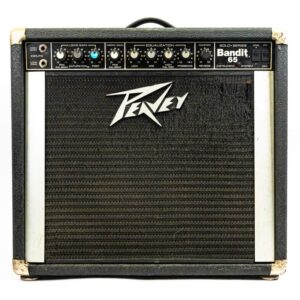
The first Bandit appeared in 1980 and was only made for a year, but the name stuck. It became Peavey’s flagship solid state combo, especially after the 1995 NAMM show. There, Peavey engineers ran blind A/B comparisons between a new Bandit and a competitor’s tube amp to show off what would become the TransTube circuit. The current Bandit 112 puts out 100 watts through a 12-inch Blue Marvel speaker across two channels. Guitar Player singled it out in 2023 for its “heroic reliability”, a fair summary of an amp that has spent decades in rehearsal rooms and pub backlines.
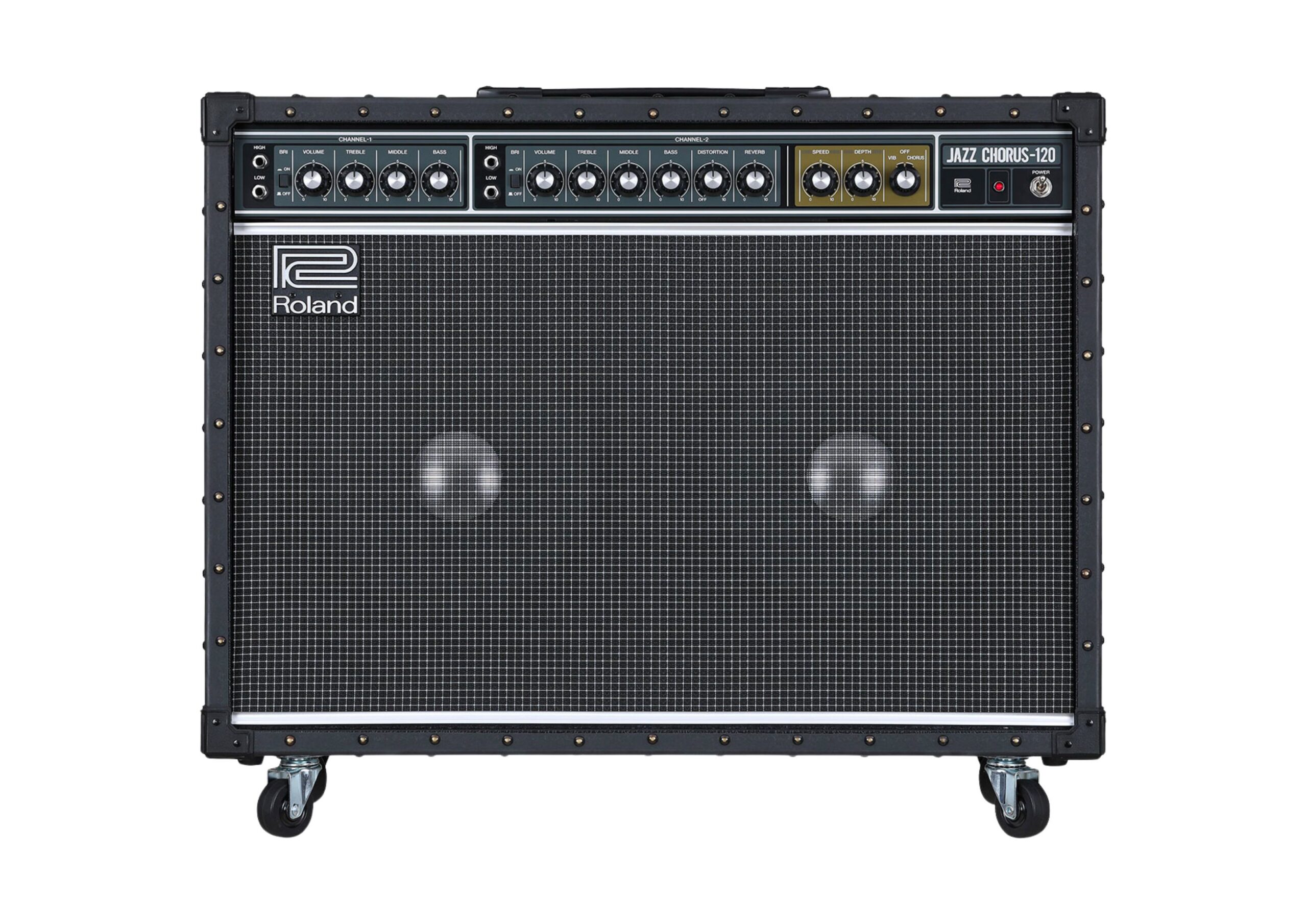
Roland Jazz Chorus (JC-40/JC-120)
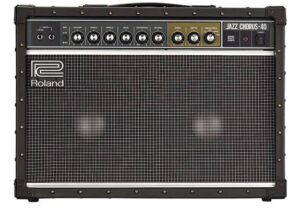
The JC-120 was released in 1975 as Roland’s first guitar amp. It pairs 120 watts of stereo power and two 12-inch speakers with the Dimensional Space Chorus that gave the amp its name, a circuit Roland repackaged a year later as the Boss CE-1. Its huge clean headroom made it a staple of new wave and indie through the ’80s, with Andy Summers, Johnny Marr and The Cure all relying on it, and James Hetfield has long used one for Metallica’s clean tones. Players who’d rather not lug the full-size version up a flight of stairs can get the JC-40, which brings the same stereo chorus down to 40 watts and a pair of 10-inch speakers.
Yamaha TA-60
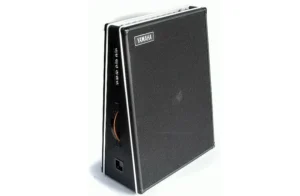
Yamaha’s 1968 catalogue included one of the strangest-looking combos of the era. Shaped like a wedge, the TA-60 drives 60 watts into a pair of flat, trapezoidal Flexion “Natural Sound” speakers. They were designed to behave more like a piano soundboard than a regular cone, and they give the amp a distinct colour. Tremolo and reverb come on one of its two channels. Working examples are rare and parts are hard to find, but surf players still seek them out for the clean tone and the way those odd speakers spread the top end around a room. For those in the know, ‘The Wedge’ is one of the coolest bits of space-age gear out there.
Sunn Beta Lead
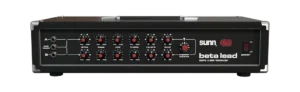
Rod Goldhammer designed the Beta series in the late ’70s, after Oregon industrialist Tom Hartzell bought Sunn from the Sundholm family. He treated the preamp as the place to shape the tone and the power amp as clean horsepower behind it. The 100-watt Beta Lead became the backbone of the Melvins’ sound under Buzz Osborne. Kurt Cobain was running three of them by early 1990, during the Bleach era, and Adam Jones used one while recording Tool’s Lateralus. The originals have a famously twitchy master volume, with most of the clean-to-loud range packed between 2 and 3 on the dial. The 200-watt reissue from the revived Sunn spreads that range across the full sweep of the knob.
Kustom 400B
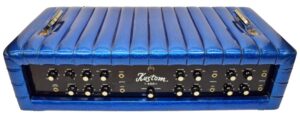
Bud Ross founded Kustom in Chanute, Kansas in the mid-’60s and gave its amps one of the most recognisable looks in music gear: padded tuck-and-roll Naugahyde borrowed from hot-rod upholstery. Black was standard, but it also came in sparkle colours such as Cascade, red, gold and silver. Under all that vinyl were loud, clean solid state circuits, and the 400 series heads paired with ported cabinets became a common sight in bass rigs in the early ’70s. Johnny Cash, the Grateful Dead and the Jackson 5 all used Kustom gear in the brand’s heyday, before the tuck-and-roll covering was dropped in the late ’70s.
Peavey Decade
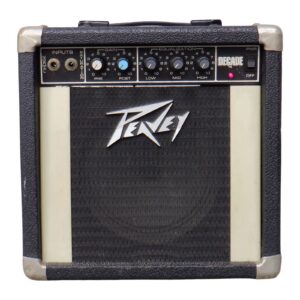
Peavey launched the Decade around 1980 as an affordable 10-watt practice combo. It had an 8-inch speaker, separate Normal and Saturation inputs, pre and post gain and a three-band EQ. It might have stayed a bedroom amp if Josh Homme hadn’t named it as his secret weapon across several Queens of the Stone Age records, where its wiry, midrange-heavy drive helps guitar parts cut through a crowded mix. Used prices climbed soon after, and in 2025 Peavey teamed up with Homme on the Decade Too. That version moves Saturation to a footswitchable control and adds an effects loop and an XLR direct out. Homme has stated that the Decade works particularly well in the studio as a bass amp, especially when paired with a Coles 4038 ribbon mic.
Orange Super Crush 100
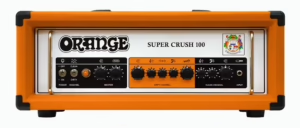
Orange built the Super Crush 100 on the success of its Crush Pro range. It runs a single-ended, two-channel JFET preamp voiced after the company’s flagship Rockerverb into the 100-watt Class A/B power amp from the Pedal Baby 100. Both channels share a master EQ. A digital reverb, a buffered effects loop and a balanced XLR output with CabSim speaker emulation make it as useful going straight to the desk as it is in front of a 4×12. It comes as a head or a combo, and it’s the easiest amp on this list to buy new off the shelf.
Quilter Tone Block 202
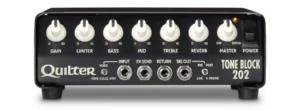
Pat Quilter released the Tone Block 202 in 2019, and it weighs just 1.36 kilograms despite a 200-watt Class D power amp. A three-way voicing switch includes a full-range FRFR mode, a first for the Block series, so modeller users can run it as a lightweight power amp. A master power control sets the actual operating wattage rather than just the volume, so the amp keeps its character at lower levels. Pedal steel players have taken to it too, with Travis Toy’s signature combo built around a removable Tone Block 202.
Tech 21 Trademark 60
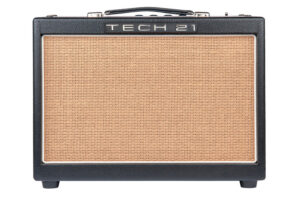
The Trademark 60 was Tech 21’s first guitar combo, arriving in the mid-’90s with the company’s analogue SansAmp emulation circuitry built in. It’s a two-channel, 60-watt 1×12 with a Celestion Seventy80 speaker, active low and high EQ, reverb, boost and a built-in direct out for the desk or foldback. It was later offered in 2×12 and 4×10 versions. At around 16 kilograms it’s a reliable grab-and-go gigging amp, and it’s well worth a look on the second-hand market now that it’s been discontinued.
Peavey Series 260 Standard
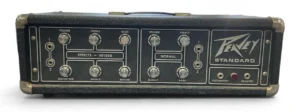
Peavey built the Standard in the US during the ’70s as a 130-watt head. It has two preamps that can run in parallel or in series, plus a folded-line spring reverb. Running the preamps in series pushes it well into overdrive, which is why stoner and doom players have kept them in circulation long after the PA mixer-amp versions were retired. Greg Ginn used one in Black Flag’s backline. Josh Homme and his band bought “two or three” Peavey heads while making Songs for the Deaf, with Homme saying this one “sort of did the best”.
Catch up on all the latest features here.