In light of their recent one-off reunion with Jason Isbell, we take a look at the gear behind alt-country’s hardest working band.
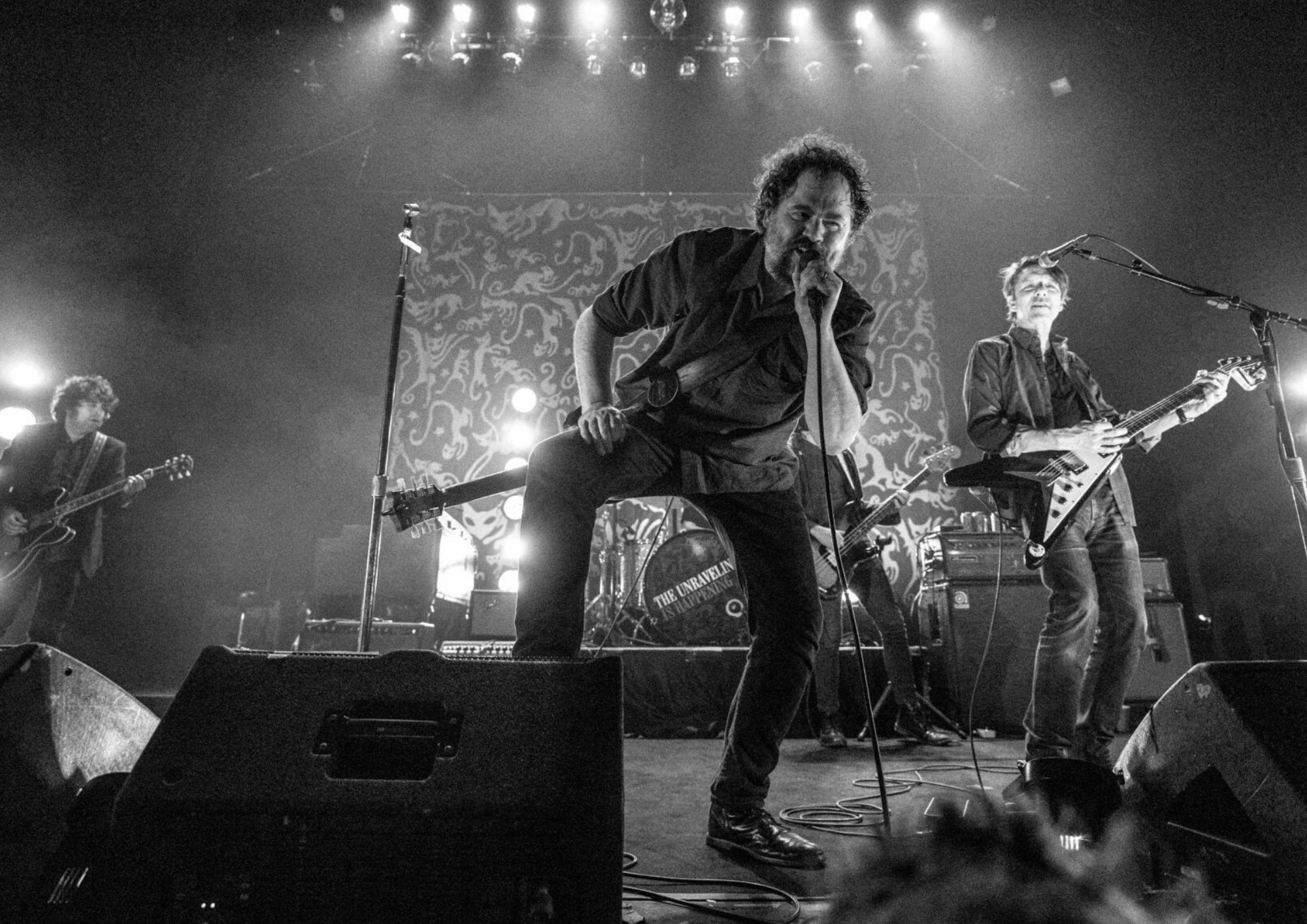
Drive-By Truckers are having quite the renaissance at the moment. Thirty years into their career as alternative country and (sort of) southern rock’s premier cult heroes, the band are experiencing a new wave of fandom as fresh acts such as MJ Lenderman and Wednesday publicly pay tribute to them as being a primary influence. Having also served as a launch pad for Jason Isbell’s esteemed solo career after his stint with the band back in the 2000s, Alabama’s masters of songcraft recently reunited with their friend and ex-bandmate for a one-off show at this year’s Shoalsfest. So, to celebrate, let’s dive into the gear that fuels this band of genre-bending road warriors.
Read more interviews, columns and features here.
The Baxendale factor
Before the gear itself, a quick word on the man whose name keeps turning up. Scott Baxendale built his first guitars in 1974 at Mossman Guitars in Winfield, Kansas. He spent time in Nashville restoring vintage instruments in the late ’70s, then bought Mossman in 1985 and moved it to Texas, where he built around 250 guitars before opening the Colfax Guitar Shop in Denver. That’s where he began teaching lutherie, and where his now-famous Harmony and Kay conversions took shape: old budget-brand guitars stripped down and rebuilt on the inside like pre-war Martins.
The Truckers came into his orbit through their guitar tech, and they took to his work straight away. Baxendale ended up joining them on the road as a tech for an acoustic tour, fell for Athens, and relocated there in 2010 to open Baxendale Guitars. The band has returned the favour, thanking him in their liner notes and even writing a song about him. As you’re about to see, a lot of the strangest instruments in this rig carry his stamp.
Mike Cooley
Keith Richards and Townes Van Zandt rolled into one, Mike Cooley serves as the band’s dark horse. Having written some of their most rowdy rockers as well as some of their most heart wrenching country ballads, ‘The Stroker Ace’ doesn’t speak much, but when he does it carries weight.
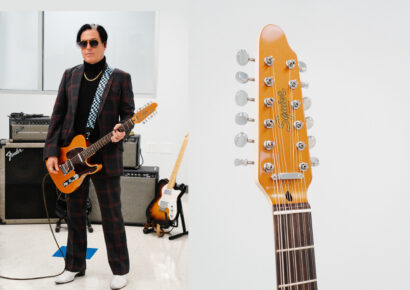
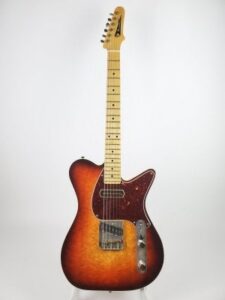
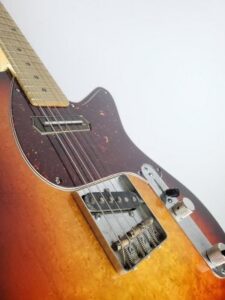
Cooley’s guitar collection is a lesson in embracing the unloved ugly ducklings of the guitar world. His stock Epiphone Flying V has taken some damage along the way and been glued back together, while his rare and perhaps best forgotten Gibson Corvus I is, in his words, a “bad idea from the ’80s” that he’s kept rocking with a retrofitted P-90. Two Baxendale builds round things out. His longstanding main guitar is a warped, Keef-inspired T-style nicknamed the ‘Cooleycaster‘ that carries a Seymour Duncan Hot Rails in the bridge and a Seymour Duncan Seth Lover SH-55 in the neck, and his main acoustic is a custom Baxendale adorned with unique artwork by the band’s late great collaborator Wes Freed. Cooley also has a second Cooleycaster that features Lollar pickups, specifically a Charlie Christian in the neck and their alnico Hot Tele in the bridge.
The amp rig is simple and direct. A single-channel Sommatone Roaring 40 head feeds a matching Sommatone 2×12 open-back cab loaded with Eminence Red Coat speakers, with an unidentified Sound City head riding along as insurance.
Also nice and simple is his pedalboard. A Dunlop JD-4S Rotovibe and Dunlop Cry Baby Wah lead off, with dirt courtesy of a Boss SD-1 Super Overdrive and a Greer Amps Pork ’N’ Beans boost. The signal then hits a Boss RE-20 Space Echo, a TC Electronic PolyTune and a Morley ABY Switcher, which lets him jump between his acoustic and electric rigs. A Sommatone Boost footswitch sits close by for extra gain, and a Voodoo Lab Pedal Power 2 Plus tucked under the Pedaltrain board runs the lot.
Patterson Hood
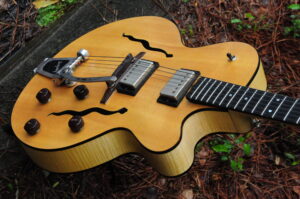
DBT’s most prolific songwriter and enthusiastic spokesman Patterson Hood’s guitars are a mix of the vintage and the handmade. The son of David Hood, bassist and member of Muscle Shoals’ legendary Swampers studio band, Patterson’s Alabama music roots run deep. The showpiece of Hood’s rig is a semi-hollow Baxendale fitted with a Bigsby and a pair of Seymour Duncan Antiquity humbuckers. Its snake-shaped f-holes were drawn by Wes Freed, the artist behind all of the band’s artwork. There are also two Gibson SGs, one tuned down a whole step to accommodate the bulk of the band’s material being in D standard.
Then there’s the Baxendale Mandocello, which ties neatly back to that Kay conversion story. It starts life as an old Kay acoustic, with Baxendale modifying the braces, cutting a new bridge and nut and swapping in mandolin tuners. It’s tuned F–C–F–C, a unique oddball addition to the band’s rig.
Hood’s amp choices are classic Americana: a 1972 Fender Deluxe Reverb alongside a reissue ‘63 Fender Tube Reverb, with the two sometimes running together because he likes reverb on top of reverb for the band’s spacier jams. A Fender Vibro-King stays close as an auxiliary amp.
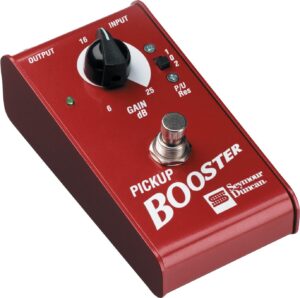
The pedalboard breaks a golden rule by placing delays before the drive. After a TC Electronic PolyTune, the signal runs through a Boss RE-20 Space Echo and Boss DD-3 Digital Delay, then into a Seymour Duncan Pickup Booster, Boss SD-1 Super Overdrive, Boss GE-7 Equalizer and Electro-Harmonix Small Stone Analog Phase Shifter. A Morley ABY Switcher splits the signal to both amps, and a Voodoo Lab Pedal Power 2 Plus keeps everything fed.
Jay Gonzalez
Multi-instrumentalist and secret weapon Jay Gonzalez follows the same philosophy as his bandmates, favouring the odd and the old. His main guitar is a 1968 Gibson SG Special with its original P-90s and Vibrola tailpiece, backed by a vintage Gibson SG-100 with a single P-90 and a Bigsby.
His amp is an Ace of Clubs combo built by fellow Athens maker Steve Hunter, with one British-flavoured channel, one American-flavoured channel, and reverb.
On his board, a TC Electronic PolyTune leads into an MXR Micro Amp, a DOD FX52 Classic Fuzz modified by Steve Hunter and a Xotic EP Booster. Things then get trippy with a TC Electronic Flashback delay, finishing with a Boss RT-20 Rotary Ensemble.
And that’s a wrap! Three players, three very different boards, and a band that proves the most interesting tones rarely come off the shelf.
Learn more about Drive-By Truckers here
Seymour Duncan is distributed locally by Australis